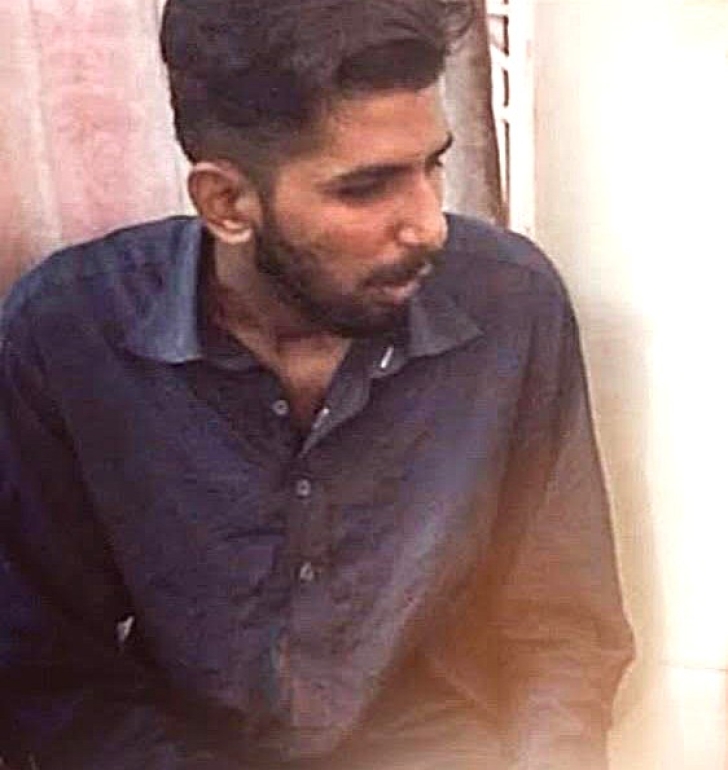
An international Christian legal advocacy organization has urged Pakistan to release Shahzad Masih, a Christian sentenced to death for blasphemy allegedly committed when he was a minor.
Masih was 16 when he was arrested in July 2017 for allegedly repeating derogatory remarks by another person about Islam, and the United Nations has declared his detention arbitrary. More than nine years later, he remains on death row, with his appeal pending before the Lahore High Court despite a U.N. call for his immediate release, according to the American Center for Law and Justice (ACLJ). ACLJ, through its Pakistani affiliate, the Organization for Legal Aid (OLA), is pursuing Masih’s release.
According to the ACLJ, Masih was working at a hospital in Punjab Province when a Muslim coworker questioned him about his religious beliefs. During their conversation, he referred to derogatory remarks allegedly made by a family acquaintance, identified as Ali, a Muslim friend of his father.
After members of a religious organization confronted him over the remarks, Masih reportedly clarified that he was merely repeating what the acquaintance had said. He was taken to an Islamic seminary before being handed over to police and arrested on July 13, 2017. Masih was charged under Section 295-C of Pakistan’s blasphemy statutes, which calls for the death penalty for derogatory remarks about Islam’s Prophet Muhammad.
After more than five years of legal proceedings, a trial court sentenced Masih to death by hanging on Nov. 22, 2022. His appeal, filed days later, has yet to be heard by the Lahore High Court.
The ACLJ said even prosecution witnesses acknowledged that Masih was reporting another person’s words rather than expressing his own beliefs.
“Shahzad Masih was just 16 years old when he was arrested, and nine years later, he remains on death row for allegedly reporting someone else’s words,” CeCe Heil, senior counsel and international legal director for the ACLJ, said in the press statement. “We urge Pakistani authorities to uphold fundamental human rights, overturn this unjust conviction, and bring Shahzad Masih home to his family.”
In Opinion No. 65/2023, adopted in Nov. 2023 and published in Feb. 2024, the U.N. Working Group on Arbitrary Detention determined that Masih’s imprisonment violated international human rights standards, including protections against arbitrary detention, discrimination and denial of a fair trial, according to the ACLJ.
The working group called for his immediate release, compensation and an independent investigation into the circumstances of his arrest and detention. It also raised concerns about Pakistan’s blasphemy laws and their impact on religious minorities.
The U.N. opinion followed concerns about several aspects of Masih’s treatment by authorities. Despite being a minor at the time of his arrest, the trial court rejected his request to be tried as a juvenile, disregarding his government-issued birth certificate, according to the ACLJ.
He was also interrogated without legal representation during the initial stages of his detention, the group stated.
Despite the U.N. body’s findings, Masih remains imprisoned.
The ACLJ said its legal team has filed at least four petitions seeking an early hearing of Masih’s appeal before the Lahore High Court. Although hearings have been scheduled, they have repeatedly been postponed.
ACLJ’s Pakistani lawyers have also submitted formal applications to the chief justices of Pakistan’s Supreme Court and Lahore High Court, as well as the federal minister for law and justice, urging them to intervene and ensure his case is heard without further delay, the advocacy group said.
Pakistan’s blasphemy laws have long drawn criticism from human rights organizations and legal experts. Besides blatantly violating freedom of speech, they warn that the provisions can be misused in personal disputes and have disproportionately affected religious minorities. Although the country has yet to carry out a state execution for blasphemy, accusations have repeatedly triggered mob violence and extrajudicial killings, while suspects can spend years in detention awaiting trial.
Recent court acquittals of two Christian men have reinforced longstanding concerns about the misuse of the laws.
On July 6, a Lahore court acquitted 37-year-old Dennis Albert, who had spent more than two years in prison after being accused of desecrating pages of the Quran. His lawyer, Asad Jamal, said the court identified serious deficiencies in the police investigation and found material inconsistencies in the prosecution’s evidence.
On June 22, another Lahore court acquitted 49-year-old blind Catholic Nadeem Masih after he spent 10 months in prison on a blasphemy charge carrying a mandatory death sentence. The court ruled that prosecutors had failed to present sufficient evidence to substantiate the allegation.
On July 1, 61-year-old Amir Peter, who suffered from advanced dementia, died in custody after spending nearly a year in jail awaiting trial on a false blasphemy accusation. According to the advocacy group representing him, Peter died after receiving inadequate medical care just days before a court was scheduled to hear medical evidence supporting his bail application.
International advocacy groups continue to rank Pakistan among the world’s most difficult countries for Christians. In its 2026 World Watch List, Open Doors ranked Pakistan eighth among the 50 countries where Christians face the most severe persecution, citing systemic discrimination, mob violence, forced conversions, bonded labor and gender-based violence. The organization also said weak law enforcement and widespread impunity have enabled perpetrators of anti-Christian attacks to evade accountability.