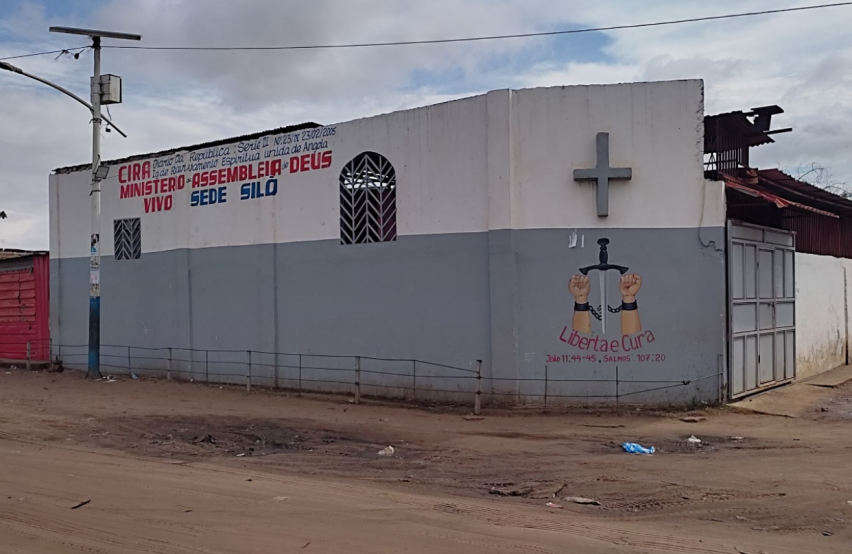
Religious freedom advocates are questioning whether church registration requirements in Angola are making it difficult for smaller Christian communities to gain legal recognition, after African church leaders examined the issue at a continental theological symposium in Nairobi.
The All Africa Conference of Churches (AACC) highlighted Angola's registration system during its seventh annual theological symposium, held Oct. 5-8 under the theme “Freedom of Belief and Persecution in Africa.” Participants examined how governments can regulate religious institutions without undermining the rights of religious minorities.
The Rev. Quelende Adriano, who presented on Angola, warned that high membership requirements for official church recognition can marginalize emerging and minority religious communities, according to the AACC’s report on the symposium’s conclusion.
The issue is particularly significant for Pentecostal and other independent Christian groups in Angola, where the legal requirements for recognition have been described as difficult for many congregations to meet.
A high threshold for recognition
Angola’s Law on Religious Freedom and Worship, adopted in May 2019, requires religious groups seeking official recognition to provide 60,000 signatures from eligible residents. At least 1,000 signatories must reside in each of the country's 18 provinces. Each signature and residency declaration must be notarized separately.
The requirements create financial and administrative hurdles for groups seeking recognition. Religious organizations must also submit documentation about their organizational structure, worship activities, financial resources and planned construction projects.
According to the U.S. State Department's 2023 International Religious Freedom Report on Angola, the government estimated that more than 1,200 religious groups remained unregistered, compared with 88 recognized groups at the time.
The report said unregistered religious groups had complained that the notarization and residency documentation requirements were expensive and burdensome. It also identified difficulties involving residency records and people without legal immigration status as additional obstacles.
The consequences extend beyond paperwork. Official recognition gives religious groups legal status and allows them to acquire property collectively and use it for religious activities. It also provides certain tax exemptions and legal standing as incorporated entities.
Open Doors, a Christian organization that monitors persecution, identified registration as a major challenge for church groups in its 2025 analysis of Angola.
“Registration remains one of the most challenging problems faced by thousands of Christian church groups in the country,” the organization reported.
Open Doors said the requirements had left numerous Pentecostal churches and other nontraditional Christian denominations unregistered, creating difficulties for groups seeking land and permission to construct places of worship.
The balance between regulation and rights
Angola’s case raises a broader question for African governments. Religious institutions may be subject to legitimate rules concerning public safety, financial accountability and the lawful use of property. The requirements, however, can become a barrier when communities cannot realistically meet them.
The AACC's symposium examined that tension, with participants arguing that state oversight should be proportional, transparent and nondiscriminatory.
The gathering also considered the gap between constitutional guarantees and the experiences of religious minorities.
At the symposium’s opening, AACC General Secretary the Rev. Fidon Mwombeki drew attention to forms of persecution that receive less public attention than physical attacks.
These include economic discrimination, legal marginalization and psychological trauma, according to the AACC's account of his remarks.
The conference’s second day featured Illia Djadi of the Arise Africa campaign, who highlighted the contrast between constitutional protections and continuing discrimination against religious communities.
“The liberty of belief is guaranteed in the constitutions of many African countries, excluding a few countries in North Africa and Somalia,” Djadi said, according to the AACC's report.
The symposium did not establish that every unregistered religious group in Angola has experienced persecution. Rather, its discussions highlighted how administrative requirements can affect religious communities' ability to obtain legal recognition and operate their institutions.
A wider African concern
The AACC's closing statement called for religious freedom to move beyond academic discussion and toward practical action.
The Rev. Lesmore Ezekiel, speaking on behalf of Mwombeki, urged participants to “seek justice for the oppressed,” drawing on Isaiah 1:16-17.
The conference brought together theologians, church leaders and other participants to examine religious persecution, state authority and the responsibilities of churches in defending human dignity.
The wider challenge for African churches and governments is ensuring that constitutional commitments to freedom of religion are reflected in the laws and administrative processes that determine whether religious communities can obtain official recognition and establish places of worship.