
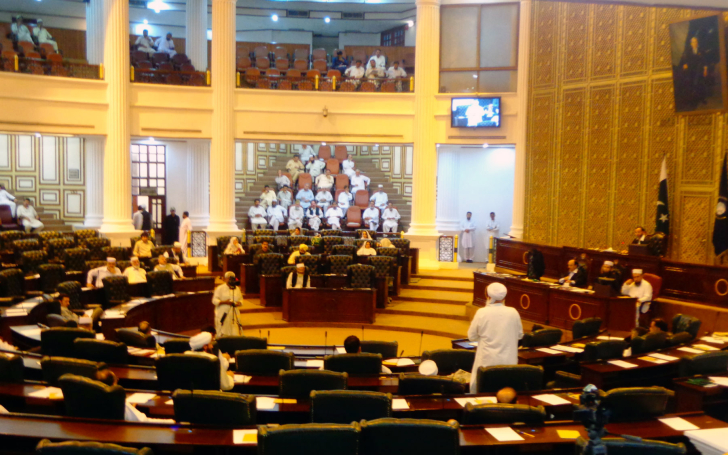
A woman lawmaker in Pakistan’s Khyber Pakhtunkhwa Provincial Assembly has introduced a private member's bill seeking to replace the province’s 154-year-old Christian marriage law with modern legislation aimed at strengthening legal protections for Christian families.
The Khyber Pakhtunkhwa Christian Marriage Bill, 2026, submitted by Pakistan People’s Party Parliamentarians (PPPP) legislator Shazia Tehmas Khan, seeks to repeal the Christian Marriage Act of 1872 and establish a comprehensive legal framework governing the solemnization, registration, regulation and legal recognition of Christian marriages in the province.
According to the draft legislation, the proposed law is designed to align Christian marriage legislation with Pakistan’s constitutional guarantees, contemporary administrative practices and the evolving needs of the province’s Christian community while preserving the religious traditions of different churches and denominations.
The bill introduces stronger safeguards against child marriage, forced marriage, coercion, fraud, misrepresentation and unlawful solemnization. It also modernizes marriage registration by requiring the secure maintenance of physical and electronic records, improving coordination with civil registration authorities, including the National Database and Registration Authority (NADRA), and enhancing legal certainty for Christian families.
The proposed legislation further safeguards the legitimacy and legal rights of children, strengthens oversight of marriage registrars and ordained ministers through greater regulatory accountability, and introduces measures to prevent fraudulent practices.
It also provides that anyone who solemnizes, conducts, facilitates, promotes or knowingly permits the marriage of a minor would be prosecuted under the Khyber Pakhtunkhwa Child Marriage Restraint Act, with the penalties, fines and trial procedures prescribed under that law applying directly to such offenses.
The bill was jointly drafted by Khan, the rights organization Blue Veins and the National Commission for Human Rights (NCHR) following extensive consultations with church leaders, clergy, Christian elders, legal experts, civil society organizations and human rights stakeholders. The drafters say the legislation is grounded in biblical values and Christian traditions while remaining fully consistent with Pakistan's Constitution and contemporary legal standards.
“This bill is a historic step toward ensuring equal rights, dignity and legal protection for the Christian community of Khyber Pakhtunkhwa,” Khan said after submitting the legislation to the provincial assembly secretariat.
“The proposed law is the result of extensive consultations with churches, clergy, community leaders and legal experts. Once enacted, it will replace an outdated colonial-era statute with a modern legal framework that protects Christian families while respecting their faith and religious traditions,” she said.
Rizwanullah Shah, provincial coordinator of the National Commission for Human Rights, said the commission's Sub-Committee on Minority Rights had played an active role in the consultative process.
“NCHR remains committed to advancing the rights of religious minorities through dialogue and inclusive lawmaking,” Shah said. “We are pleased that the commission's consultative efforts have contributed to shaping this important legislative reform for the Christian community.”
Qamar Naseem of Blue Veins said the proposed legislation seeks to balance legal modernization with respect for Christian religious traditions.
“This law modernizes Christian marriage legislation while preserving Christian values and traditions. It strengthens legal protections and addresses the practical needs of Christian families across Khyber Pakhtunkhwa,” he said.
The bill follows similar legislative efforts elsewhere in Pakistan. In April, Christian lawmaker Falbous Christopher introduced a bill in Punjab Province seeking to raise the minimum marriage age for Christians to 18 by amending the Christian Marriage Act of 1872.
Sindh province has also begun reviewing Christian personal laws, with a three-member committee examining possible amendments to the Christian Marriage Act of 1872 and the Divorce Act of 1869.
At the federal level, Pakistan’s National Assembly passed the Christian Marriage (Amendment) Act, 2024, on July 10, 2025, raising the legal marriage age to 18 in the Islamabad Capital Territory. However, following the devolution of minority affairs to the provinces under the 18th Constitutional Amendment, each provincial legislature must enact its own reforms for the changes to take effect within its jurisdiction.








