
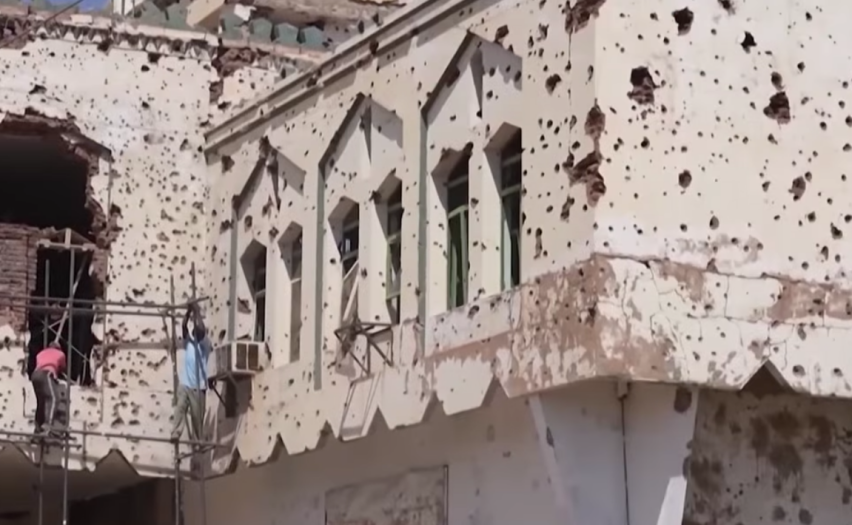
Church leaders and Christians in Sudan's Nuba Mountains are facing a growing wave of killings, abductions and attacks as fighting between rival armed factions intensifies in the country's South Kordofan state.
At least two church leaders have been killed in recent weeks, while two other Christian leaders were abducted and later released. Dozens of Christians were also reportedly kidnapped during attacks on church communities in the region, according to Open Doors.
The latest violence has raised fresh concerns about the safety of Christian communities in an area already caught between Sudan's wider civil war, tribal tensions and fighting between factions of the Sudan People's Liberation Army-North, or SPLA-N.
Pastor Adel Idris Jongool of the Episcopal Church of Sudan was shot after militants attacked the Dabbi area of Heiban District on July 24. He died from his wounds several days later.
Church sources told Morning Star News that members of a breakaway faction of the SPLA-N were responsible for the attack. The militants reportedly targeted church leaders and other civilians amid both tribal and religious tensions.
The attack came one day after six civilians were reportedly killed in the same area.
The Diocese of Heiban of the Episcopal Church of Sudan confirmed the killing of Jongool. Bishop Al-Sir Hassan Kuku condemned the attack and called on the armed groups involved in the conflict to protect church leaders and religious institutions.
“We urge all parties involved in the conflict between the SPLA-N and its break-away faction to respect church leaders and religious institutions,” Kuku said.
Pastor Yaqob Ibrahim Tia of the Sudanese Church of Christ was abducted from his home in Heiban on July 23 along with two of his sons, his 15-year-old nephew and Daniel Ibrahim Tia, the brother of Catholic priest Fadi Ibrahim Tia. Tia and the other members of his family were released on July 28. Another church leader, Zakaria Suliman Jana, was abducted on July 31. He was released Aug. 1.
The two men are prominent leaders of a Sudanese Church of Christ congregation in Heiban. Their abductions came only days apart from the killing of Jongool, prompting concern among local Christians that church leaders are increasingly being singled out.
After his release, Tia spoke against the fighting between factions of the SPLA-N in Heiban.
“The conflict that is taking place in our area is something that does not benefit everybody,” Tia said during a gathering with church leaders. He urged political leaders to reject violence and work toward peace.
Sustained attack on Christians during a civil war
Open Doors, which monitors persecution of Christians worldwide, reported Aug. 12 that the recent attacks had left two church leaders and six other people dead. It also said Christians at an Anglican seminary serving the two dioceses of the Nuba Mountains had been attacked and that dozens of worshippers were kidnapped. Thirty-two had been released, while an unknown number remained missing, according to the organization.
The violence in the Nuba Mountains is occurring within the broader war that has devastated Sudan since April 2023, when fighting erupted between the Sudanese Armed Forces and the paramilitary Rapid Support Forces.
The Nuba Mountains had largely remained outside the main battlefield during the early stages of the war. That changed as the SPLA-N became involved in the conflict and rival factions emerged in the region. Morning Star News reported that the resulting fighting has caused civilian deaths and displacement.
The SPLA-N has long been active in South Kordofan, where it has fought successive Sudanese governments. The group's involvement in the current conflict has added another layer to an already complicated war.
Open Doors said the motives behind the recent attacks are difficult to separate from the region's tribal and political conflicts.
According to a local source cited by the organization, competition over gold resources has deepened divisions between ethnic groups and contributed to militia activity. Open Doors also said Christian leaders and believers appear particularly vulnerable because of their faith.
That combination makes the situation difficult to characterize as a purely religious conflict.
Christian communities are caught in a wider struggle involving armed factions, tribal divisions, competition over resources and religious hostility.
At the same time, churches have become increasingly vulnerable during the war.
Open Doors says church buildings in Sudan have been bombed or taken over by militias and radical groups, while Christian communities have faced displacement and increasing fear.
The organization ranks Sudan fourth on its 2026 World Watch List of countries where Christians face the most severe persecution.
The Nuba Mountains have particular significance for Sudan's Christian population. The region has a substantial Christian presence and has historically experienced fighting, displacement and discrimination. Its remote location and restricted access also make independent reporting difficult.
The latest attacks have also renewed calls for Christians outside Sudan to pray for the safety of church leaders and believers, for families who have lost loved ones and for an end to the conflict that has pushed communities across the country deeper into displacement and insecurity.








