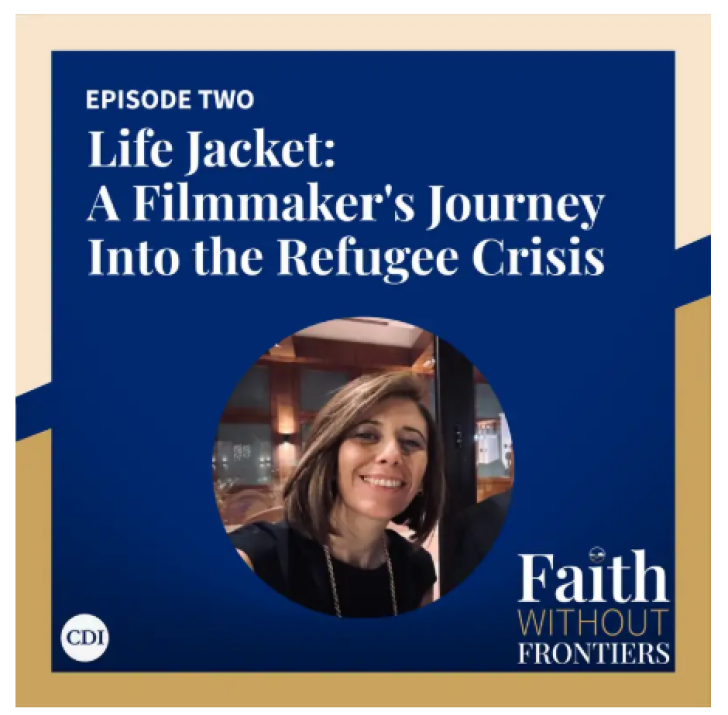
The latest episode of Faith Without Frontiers, aired this week, features a compelling conversation between host Gordon Showell-Rogers and filmmaker and documentary producer Faten AlFaraj, whose award-winning film Life Jacket shines a light on the realities faced by refugees fleeing conflict, persecution, and displacement.
Originally from Jordan and now based in Canada, AlFaraj joins the podcast to share the personal and spiritual journey behind the documentary, which was filmed on the Greek island of Lesbos, one of Europe's main entry points for refugees escaping war-torn regions such as Syria, Iraq, and Afghanistan.
Drawing on her own experience as an immigrant, AlFaraj reflects on the challenges of leaving one's homeland and adapting to a new culture. Although her family's move to Canada was planned and voluntary, she explains how that experience helped her empathize with those who have been forced to flee their homes with little warning and few possessions.
"The people I met had no choice," AlFaraj explains during the interview. "They left everything behind and were trying to build a future for their children while carrying the trauma of war, loss and uncertainty."
The documentary takes viewers inside the notorious Moria refugee camp on Lesbos, which at one stage housed tens of thousands of displaced people in conditions far beyond its intended capacity. Through interviews with refugees, aid workers and educators, Life Jacket captures both the immense suffering experienced by those living in the camp and the remarkable resilience many continue to display despite overwhelming circumstances.
AlFaraj recounts hearing stories from families who walked for days across borders, survived dangerous sea crossings, and witnessed unimaginable violence. Among the most powerful moments in the film are testimonies from parents determined to secure a future for their children despite losing homes, careers and communities.
The title Life Jacket emerged from AlFaraj's visit to what locals call the "life jacket graveyard" on Lesbos—a site filled with thousands of discarded life jackets left behind by refugees who crossed the Aegean Sea in overcrowded boats. For her, the image became a powerful metaphor not only for physical survival but also for the deeper hope many displaced people cling to in times of crisis.
Throughout the conversation, AlFaraj speaks openly about the role of faith in both her life and the lives of many refugees she encountered. While coming from diverse religious backgrounds, many expressed a profound awareness of their dependence on God amid uncertainty and loss.
The episode also highlights the work of Teach Beyond Borders, a Christian educational ministry serving refugees and displaced communities through transformational education initiatives. AlFaraj discusses how education can provide stability, dignity and hope for children whose lives have been disrupted by conflict.
As the conversation draws to a close, AlFaraj challenges listeners to move beyond their comfort zones and engage with the needs of vulnerable people around them.
"We're all made in the image of God," she says. "Whether someone is a refugee, an immigrant, or simply someone who looks different from us, we are called to love, welcome and care for one another."
This week's episode of Faith Without Frontiers offers a moving exploration of faith, displacement, compassion and the power of storytelling to give voice to those who are often unheard.