
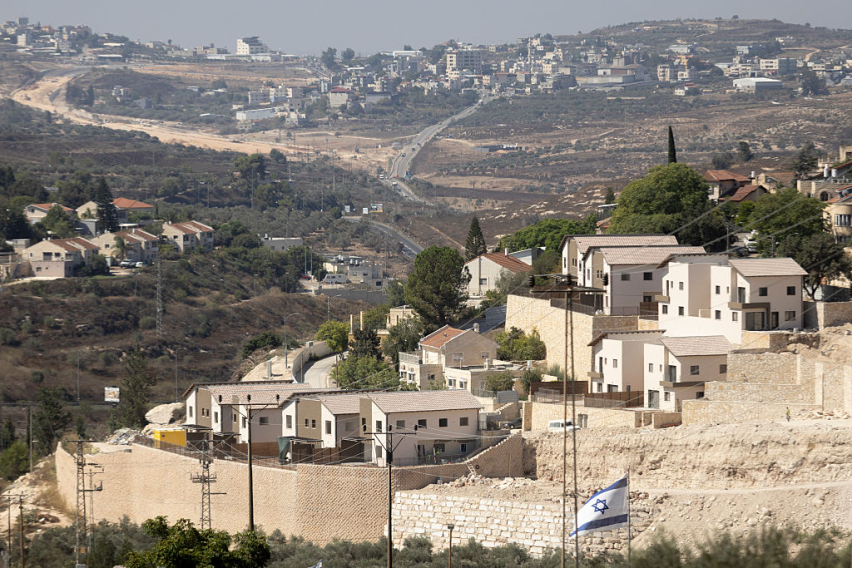
The World Evangelical Alliance urged Israel on Tuesday to rein in settler violence and halt settlement expansion in the occupied West Bank, telling the U.N. Human Rights Council it was particularly concerned about Taybeh, which the group described as the territory's last predominantly Christian village.
Speaking for its evangelical members in the Middle East, the alliance called on Israel to meet its obligations under international law, protect Palestinian civilians, prevent attacks by settlers, hold perpetrators accountable and stop the appropriation of Palestinian land, according to the text of the oral statement published by the WEA.
The Geneva intervention adds a global evangelical voice to recent criticism of settler actions against Palestinian landowners. Last month, U.S. Ambassador to Israel Mike Huckabee, a Baptist minister and longtime supporter of Israeli settlements, warned settlers against seizing West Bank homes owned by Palestinian Americans, quoting the Ten Commandments.
Concerns in 'last predominantly Christian village' Taybeh
The WEA statement was delivered by Markus Hofer during the council's 63rd session, in a general debate on human rights situations requiring the council's attention. The alliance said settler violence and Israeli military operations were contributing to the dispossession and displacement of Palestinians, "including Christians."
Taybeh residents have reported repeated settler incursions, intimidation, property damage, fires and attempts to take over privately owned land, the WEA told the council. It said settlers reportedly set up a new outpost near the village in May. In August, according to the statement, residents again reported attacks on homes and property and said they were being blocked from reaching their land.
The alliance described a sequence in which settlers first pitch tents, then build houses and eventually expand settlements. It called "deeply troubling" what it said were credible reports that Israeli authorities and military forces supply settlers with vehicles, drones and weapons. The statement did not identify the source of those reports.
"These annexation plans are detrimental for Israelis and Palestinians alike," the WEA said.
"As Christians, we believe that every person has equal dignity and the right to live safely in peace on their land," the statement said.
Palestinian evangelical leader calls for justice and protection
In a press release accompanying the statement, the Rev. Jack Sara, director of the WEA's Middle East and North Africa region, said that as a Palestinian Christian he could not separate his faith in Jesus Christ from defending the dignity and safety of every person.
"The continuing violence by Israeli settlers against Palestinian communities in the West Bank — against families, homes, land, livelihoods and places of worship — demands the attention of the global church," Sara said. "Violence and injustice cannot be justified by religion, nationalism or claims to the land."
Sara pointed to biblical calls for believers to seek justice and to make peace.
"We therefore call for the protection of Palestinian civilians, accountability for acts of violence and concrete steps that allow both Palestinians and Israelis to live in security, dignity and a just peace," he said.
Huckabee's warning over Qusra
Huckabee's comments came in an Aug. 20 interview with Reuters in Jerusalem. Settlers had surrounded at least three homes in the village of Qusra since Aug. 9, including one belonging to Loui Ridi, a Palestinian American who returned from the United States to defend his property.
"Thou shalt not steal," Huckabee told Reuters. "You don't take something that doesn't belong to you."
He said anyone found to have taken part could face legal consequences in Israel and possibly U.S. sanctions, including a ban on entering the country.
U.N. bodies and most governments regard Israeli settlements in the West Bank as illegal under international law governing military occupation. Israel rejects that position and considers the territory disputed rather than occupied.
Palestinian Christians are a small, long-established community concentrated in and around Bethlehem, Ramallah and other West Bank towns. Those communities have faced pressure on their land from settlement expansion for decades.








