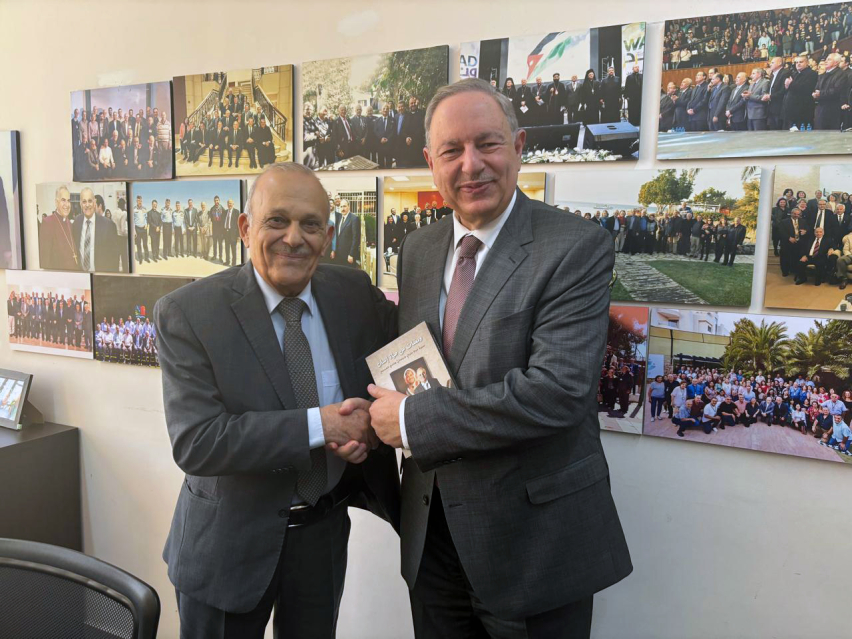
A senior Jordanian senator visited the country's Evangelical Council last week, offering a gesture of outreach after evangelicals were left out of an earlier parliamentary meeting with Christian church leaders.
Sen. Michael Nazzal, who chairs the Tourism Committee in Jordan's upper house, met with Retired Maj. Gen. Imad Ma'ayah, president of the Evangelical Council, and members of the council's board at the council's headquarters at the Evangelical Free Church in Amman's Khalda neighborhood on Monday, May 11.
The earlier meeting, held at the Parliamentary Senate offices, had brought together Catholic and Orthodox church leaders to map out plans for Jordan's 2030 millennium celebrations marking the anniversary of Jesus's baptism. Evangelicals were not included. Nazzal said his office had asked the Council of the Heads of Churches to invite relevant church leaders, but that body does not include evangelicals and generally opposes their participation in public events.
Ma'ayah briefed Nazzal on the history of evangelicals in Jordan, which he traced to the late 19th century — predating the modern Hashemite Kingdom. He described how five evangelical denominations — Baptist, Evangelical Free Church, Assemblies of God, Nazarene and Christian & Missionary Alliance — formed the council in 2007. Today the council encompasses 57 churches across the country, along with institutions and parachurch organizations that provide educational, medical and humanitarian services to Jordanians and refugees, including prison ministry.
Ma'ayah also noted that he chairs the Alliance of Evangelical Councils in Palestine and Israel, and spoke of the World Evangelical Alliance's recent selection of Rev. Botrus Mansour — a Nazareth-born pastor and advocate — as its secretary general at a general assembly in Korea last October.
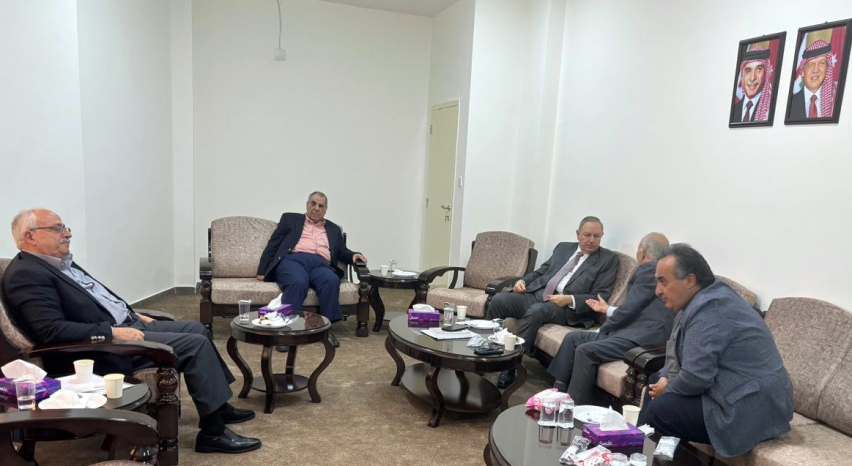
Nazzal said he was unaware of the breadth of evangelical ministry in Jordan. He encouraged evangelicals in Jordan and internationally to support the country's pilgrimage initiative and the planned 2030 event at the site traditionally identified as the location of Jesus's baptism on the east bank of the Jordan River.
Ma'ayah, who commanded the Jordanian army's royal engineering unit, told Nazzal that following the 1994 Jordan-Israel peace treaty he led the effort to clear landmines from the former border area west of the Jordan River. He also gave Nazzal a copy of his autobiography.
Ma'ayah welcomed the visit and said he hopes it signals a shift.
"We hope that decision makers in Jordan will understand the value and importance of being open to all Christians and work with us as a bridge to the evangelical world," he told CDI.