Two Sudanese pastors at a refugee camp in South Sudan have been facing death threats since an attack by Muslim extremists earlier this year, sources said.
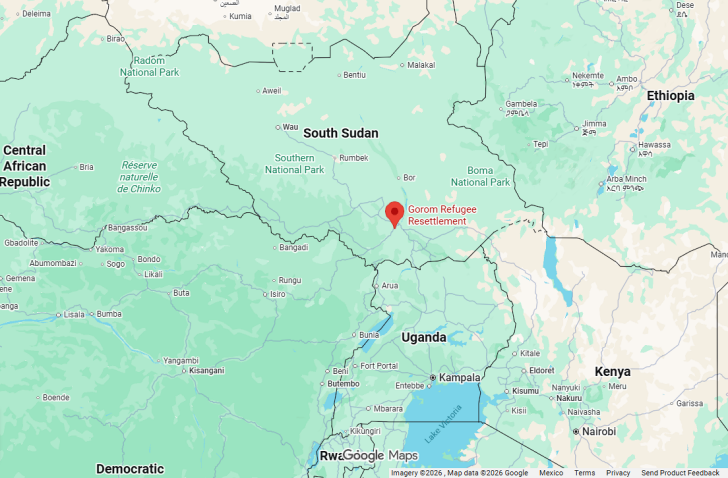
The concerns of the two pastors from Sudan’s Darfur Region heightened on Sept. 25, when a man lingered for about 30 minutes outside the home of one, Pastor Drij Haruon Khamis, at the Gorom Refugee Resettlement camp 26 kilometers (16 miles) southwest of Juba, at 9 p.m.
Believed to have been sent by the Muslim extremists who injured Pastor Khamis’ leg in an attack on him at his church site in the camp in May, the man communicated with others on his mobile phone as he seemed to be monitoring the pastor, sources said. Pastor Khamis notified police, who arrived and arrested the man; he is still into custody, he said.
Prior to the assault in May, Muslim extremists in the camp had issued threats to Pastor Khamis and Pastor Adel Idris, both leaders with the Darfur Christian Council. Police questioning the man learned that he did represent a threat, and Pastor Khamis and others on Sept. 27 informed the Darfur Christian Council and their church of the death threats and requested prayer, he said.
“This has made us fear for our lives, as we do not know what the coming days hold for us,” Pastor Khamis told Morning Star News. “There are a lot of fears, but we believe that God will take control. Glory be to God.”
The situation has caused anxiety among camp Christians from Darfur as many of them are converts from Islam, prompting calls for authorities to step in and ensure their safety.
Muslim extremists, encouraged by the imam of a mosque in the camp, view the church’s evangelistic efforts as a threat to Islam within the settlement.
Other refugees from Sudan’s Darfur Region have also faced hostilities since putting their faith in Christ, as well as rejection by their relatives in Darfur.
While South Sudan’s constitution provides for religious freedom, including the right to propagate one’s faith and convert, communal and familial pressure remains high within refugee populations originating from more restrictive regions.
In Sudan, apostasy was long punishable by death until the law was abolished in 2020. Cultural and extremist attitudes regarding conversion, however, often persist across borders, leaving converts vulnerable to “honor” killings or mob violence.
Church leaders in the Gorom camp are calling for increased protection for Christian converts and are seeking ways to provide basic necessities for those displaced by faith-based persecution. The camp has suffered shortages of food, water and healthcare since its population has swollen to more than five times its capacity.
The U.N.-supported camp was established in 2010 for about 2,500 Ethiopian refugees fleeing conflict. It has since grown significantly in response to regional crises, by August 2023 housing more than 10,000 people, including new arrivals from Sudan.
Anti-Sudanese violence in Juba in January 2025 drove more than 6,800 Sudanese refugees to Gorom, bringing its population to more than 22,000 by April 2025.
Sudan is 93 percent Muslim, with adherents of ethnic traditional religion 4.3 percent of the population, while Christians constitute 2.3 percent, according to Joshua Project.
Sudan was ranked No. 4 among the 50 countries where it is most difficult to be a Christian in Open Doors’ 2026 World Watch List (WWL). Sudan had dropped out of the top 10 of the WWL list for the first time in six years when it first ranked No. 13 in 2021.
The U.S. State Department in 2019 removed Sudan from the list of Countries of Particular Concern (CPC) that engage in or tolerate “systematic, ongoing and egregious violations of religious freedom” and upgraded it to a watch list. Sudan had previously been designated as a CPC from 1999 to 2018.
In December 2020, the State Department removed Sudan from its Special Watch List.