
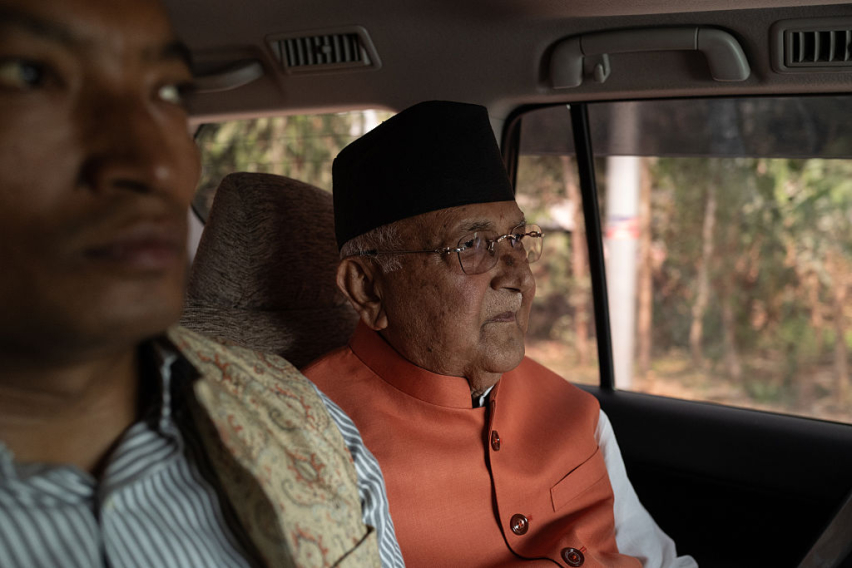
Nepal’s former Prime Minister K. P. Sharma Oli was arrested Saturday, March 28, as authorities investigate his alleged role in a deadly police crackdown on anti-government protests last year, a move that has triggered fresh unrest and political confrontation in the country.
Police detained Oli, 74, at his residence in Kathmandu early Saturday and later transferred him to a hospital for routine medical checks due to his age and history of kidney transplants, officials said. Former Home Minister Ramesh Lekhak was also arrested following recommendations from an investigative panel that both men be prosecuted for criminal negligence.
The arrests come just a day after Balendra Shah, a 35-year-old rapper-turned-politician, was sworn in as Nepal’s new prime minister following elections triggered by the crisis. Rastriya Swatantra Party, led by Shah, secured a landslide victory, marking a rare outright majority in Nepal’s fragmented political system, as previously reported by Christian Daily International.
Authorities say the investigation centers on the government’s response to the so-called “Gen Z protests” in September, when demonstrations initially sparked by a social media ban escalated into nationwide unrest fueled by frustration over corruption, unemployment and economic stagnation. At least 76 people were killed during the protests, many of them shot by police, according to officials and investigators.
The panel concluded that Oli and Lekhak failed to act to stop prolonged police firing on demonstrators. Oli has rejected the findings, previously describing them as politically motivated. His lawyer told Reuters the arrest was “illegal and improper,” arguing there was no risk of him fleeing or obstructing the investigation.
Supporters of Oli’s Communist Party of Nepal (Unified Marxist–Leninist) have launched protests in Kathmandu, with some clashing with police who used tear gas and batons to disperse crowds attempting to block roads and burn tires. Party leaders have called the arrest an act of “revenge” and announced plans for nationwide demonstrations.
Government officials defended the move. Home Minister Sudan Gurung said the arrests marked “the beginning of justice,” adding that “no one is above the law.”
The unrest that led to Oli’s resignation in September was among the deadliest episodes of civil violence in Nepal in recent years. What began as youth-led protests over restrictions on social media quickly expanded into broader demonstrations against governance failures. Parliament buildings, police stations and businesses were set on fire, and families of victims have since demanded accountability for the deaths.
Oli, who served as prime minister four times between 2015 and 2025, had attempted a political comeback in elections held earlier this month but was defeated, including in his own constituency. Analysts say public anger over the protest deaths contributed significantly to the electoral outcome.
The arrests underscore the fragile political environment in Nepal as the new government takes office, with tensions between reformist leadership and established political figures continuing to surface.
Christian Daily International previously reported that Nepal’s political transition has been closely watched by Christian communities in the country, who have expressed both cautious hope and concern about the direction of governance. Church leaders have pointed to ongoing challenges including restrictions on religious freedom, legal pressures related to conversion laws, and uncertainty over how future administrations may balance secular governance with minority rights.








