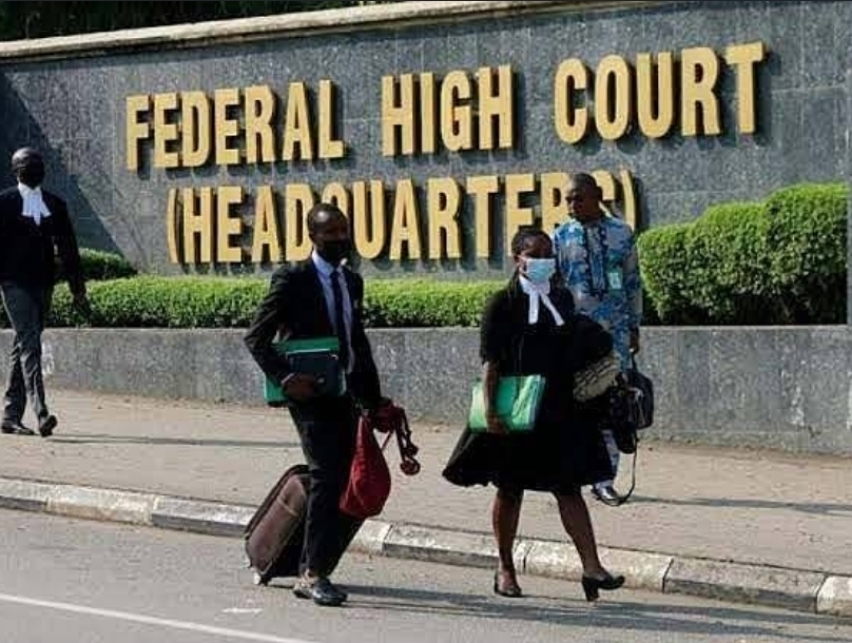
A Nigerian Federal High Court has ruled that Kano State’s Islamic religious police cannot arrest a Christian woman because she converted from Islam or refused a forced marriage, in a case that has raised fresh questions about the limits of Hisbah authorities in northern Nigeria.
The ruling concerns a 22-year-old woman identified as Sarah for security reasons. She fled her family home in Kano State in 2025 after suffering abuse from her older siblings, who were also attempting to force her into marriage against her wishes, according to Alliance Defending Freedom International, which supported her legal case.
Sarah’s parents had died years earlier, leaving her in the care of her older siblings. After leaving home, she sought refuge with a Christian family known as the Abaras. While staying with the family, Sarah converted to Christianity.
Her siblings then worked with the Kano State Hisbah, an Islamic religious enforcement body, to have her arrested, according to ADF. She was detained for four days and was allegedly beaten and pressured to accept the marriage she had fled.
After her release, the Abaras helped her relocate to Jos in January 2026 because of concerns about further threats.
Sarah’s siblings subsequently accused the Christian family of kidnapping her. The Abaras were arraigned in Kano on Feb. 26 without legal counsel and remain involved in a criminal case, according to ADF.
Sarah filed a fundamental rights petition on Feb. 24 in a Federal High Court in a neighboring state.
On May 26, the court ruled in her favor, ordering Kano State and the Hisbah not to pursue her arrest over her conversion to Christianity or her refusal to marry.
The court described the actions against Sarah as a “flagrant violation” of her fundamental rights to human dignity and freedom of religion. It also ordered financial compensation for the violations, according to ADF.
ADF said the ruling represents an important legal limit on the reach of Islamic religious police in northern Nigeria.
“The court's ruling in Sarah’s case affirms that the Hisbah police have no jurisdiction over Christians or other non-Muslims,” said Sean Nelson, senior counsel for global religious freedom at ADF.
The organization said the case could have implications for other Christians and converts who face pressure from religious authorities in northern states where Hisbah bodies operate.
Sarah said she was grateful that the court recognized her right to choose her faith.
“It is not against the law for me to choose my faith in Jesus,” she said. “I am thankful the court has recognized my freedom to become a Christian and that I am now protected from the religious police.”
The ruling does not, however, end the legal problems facing the Christian family that helped Sarah.
ADF said the criminal case against the Abaras remains ongoing in Kano. The family is out on bail while ADF supports their defense and argues that they did not kidnap Sarah but helped her escape what they described as a dangerous situation.
Enforcing religious laws
The case highlights the complicated position of religious law enforcement in northern Nigeria, where several states operate Hisbah bodies alongside the country's conventional police and court systems.
Kano is among the northern states where Sharia-based criminal law operates alongside Nigeria's federal legal system. Hisbah organizations have traditionally been involved in promoting Islamic norms and addressing alleged violations of Sharia in predominantly Muslim communities.
A 2019 U.S. Commission on International Religious Freedom report on Sharia criminal law in northern Nigeria found that Hisbah laws in Kano, Zamfara and Sokoto give the bodies responsibilities connected to promoting conformity with Sharia in areas such as worship, dress and social interactions. The same report noted that Hisbah does not have a mandate to convert people to Islam.
The latest case therefore touches on a wider question about the treatment of Christians and other religious minorities in states where Islamic law operates.
ADF said Christians and other religious minorities in northern Nigeria face threats linked to religious violence, blasphemy laws and restrictions on religious freedom. The organization has also represented Christians in other cases involving alleged religious persecution.
One such case involved Rhoda Jatau, a Christian mother who spent 19 months in prison after being accused of sharing a video condemning the killing of Christian student Deborah Emmanuel Yakubu. Jatau was acquitted in December 2024, according to ADF.
The organization also said it supported the case of a Christian man identified as David, who was acquitted in 2025 after being arrested and allegedly tortured for helping Christian converts flee violence.
For Sarah, the court ruling means she can remain a Christian without facing arrest by Kano's Hisbah over her conversion or refusal to enter the marriage she rejected.
But the continuing prosecution of the Abaras means the legal dispute is not over.
ADF is calling for the charges against the family to be dropped, arguing that their actions were intended to protect Sarah rather than unlawfully take her from her relatives.
The case also comes as concerns continue to grow over religious freedom in northern Nigeria, where Christians and Muslims live alongside one another amid longstanding tensions over religion, law and political authority.
It also places a spotlight on the limits of religious enforcement bodies in a country whose constitution protects freedom of religion while allowing states in the north to operate elements of Sharia law.
The Federal High Court’s decision does not resolve those wider tensions, but for Sarah it has provided protection from further arrest over a decision she says was her own.
She can now practice her Christian faith without the threat of arrest from the Hisbah over her conversion, while the family that gave her refuge continues to fight the criminal charges brought against them.