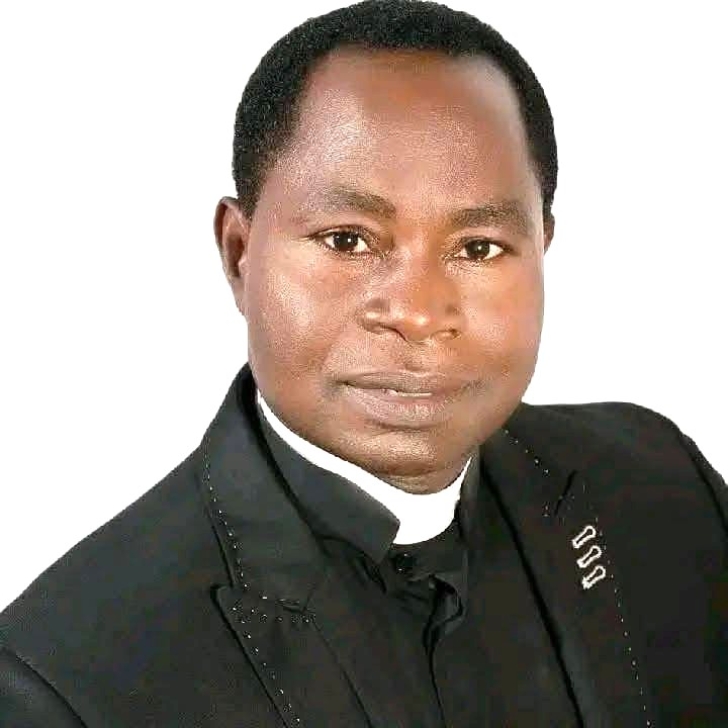
Targeting of Christian leaders in Nigeria continued as a Catholic priest was assaulted last week, and another who was kidnapped in October was released days later, sources said.
In central Nigeria’s Benue state, suspected Fulani gunmen attacked the Rev. Peter in the Zaki Biam area on Friday (Nov. 6), said area resident Titus Kaase. The priest of the Catholic Diocese of Gboko was ambushed on the Makurdi-Zaki Biam Road, Kaase said.
“A Catholic priest, the Rev. Peter Kwen, was attacked at about midnight by gunmen believed to be Fulani bandits in Zaki Biam while he was returning from Makurdi town,” Kaase told Christian Daily International-Morning Star News. “He was injured, left unconscious, and abandoned by the roadside by his attackers. Despite this painful and traumatic experience, we give thanks to Almighty God for sparing his life. We pray for his speedy recovery, divine protection, and renewed strength.”
The attack followed the kidnapping of the Rev. John Inalegwu Otache of the Catholic Diocese of Otukpo, also in Benue sate, on Oct. 13, along the Otobi Amejo-Ajegbe Road. He was released on Oct. 18.
The Rev. Joseph Itodo, chancellor of the Diocese of Otukpo, said the priest’s release was the result of Christians’ prayers and divine intervention.
“While giving all the glory to God, the bishop of the Catholic Diocese of Otukpo, the Most Rev. Michael Ekwoyi Apochi, sincerely appreciates all the priests, religious, lay faithful of the diocese and all people of goodwill for their show of solidarity and earnest prayers which led to the safe return of our brother,” Itodo said in a statement. “As we continue to commend to the Lord the lives of other numerous people who are held captives by criminal gangs in various parts of the country for their safe rescue, we pray that God will preserve us from all evil and restore sanity to our country Nigeria.”
Catholic and Protestant clergy have often been targeted among the surge in abductions of civilians in the past seven years. From October 2019 to September 2025, 34,773 civilians were abducted in Nigeria, and there were 4,590 attacks with abductions – an average of two attacks per day involving kidnappings, according to a report by the International Institute for Religious Freedom (IIRF) and the Observatory of Religious Freedom in Africa (ORFA).
The report found 73 percent of civilians abducted died or disappeared in the attacks on their communities. The report added that in the last three months of 2025, abductions increased 153 percent compared with the same quarter in 2024 (from 1,352 to 3,427).
“Fourth quarter 2025 is the worst quarter for killings and abductions in ORFA's seven years of monitoring,” the report stated.
Among 42,033 civilians killed during the six-year period, 22,835 were Christians and 10,519 were Muslims, according to the report.
While the religious component of such attacks is often overlooked, a report by Open Doors based on the ORFA data stated that the figures do not establish that religious identity was the sole reason for every attack. Motives of armed groups were often mixed, and the religious identity of some victims could not be confirmed.
The report describes conflicts shaped by religious, ethnic, economic and environmental factors that involve Fulani militant groups as well as Islamic extremist rebel groups Boko Haram and the Islamic State West Africa Province (ISWAP).
More Christians were killed in Nigeria than in any other country from Oct. 1, 2024 to Sept. 30, 2025, according to Open Doors’ 2026 World Watch List. Of the 4,849 Christians killed worldwide for their faith during that period, 3,490 – 72 percent – were Nigerians, an increase from 3,100 the prior year.
Nigeria ranked No. 7 on the WWL list of the 50 countries where it is most difficult to be a Christian.
Numbering in the millions across Nigeria and the Sahel, predominantly Muslim Fulani comprise hundreds of clans of many different lineages who do not hold extremist views, but some Fulani do adhere to radical Islamist ideology, the United Kingdom’s All-Party Parliamentary Group for International Freedom or Belief (APPG) noted in a 2020 report.
“They adopt a comparable strategy to Boko Haram and ISWAP and demonstrate a clear intent to target Christians and potent symbols of Christian identity,” the APPG report states.
Christian leaders in Nigeria have said they believe herdsmen attacks on Christian communities in Nigeria’s Middle Belt are inspired by their desire to forcefully take over Christians’ lands and impose Islam as desertification has made it difficult for them to sustain their herds.
In the country’s North-Central zone, where Christians are more common than they are in the North-East and North-West, Islamic extremist Fulani militia attack farming communities, killing many hundreds, Christians above all, according to the report. Jihadist groups such as Boko Haram and the splinter group ISWAP, among others, are also active in the country’s northern states, where federal government control is scant and Christians and their communities continue to be the targets of raids, sexual violence, and roadblock killings, according to the report. Abductions for ransom have increased considerably in recent years.
The violence has spread to southern states, and a new jihadist terror group, Lakurawa, has emerged in the northwest, armed with advanced weaponry and a radical Islamist agenda, the WWL noted. Lakurawa is affiliated with the expansionist Al-Qaeda insurgency Jama’a Nusrat ul-Islam wa al-Muslimin, or JNIM, originating in Mali.