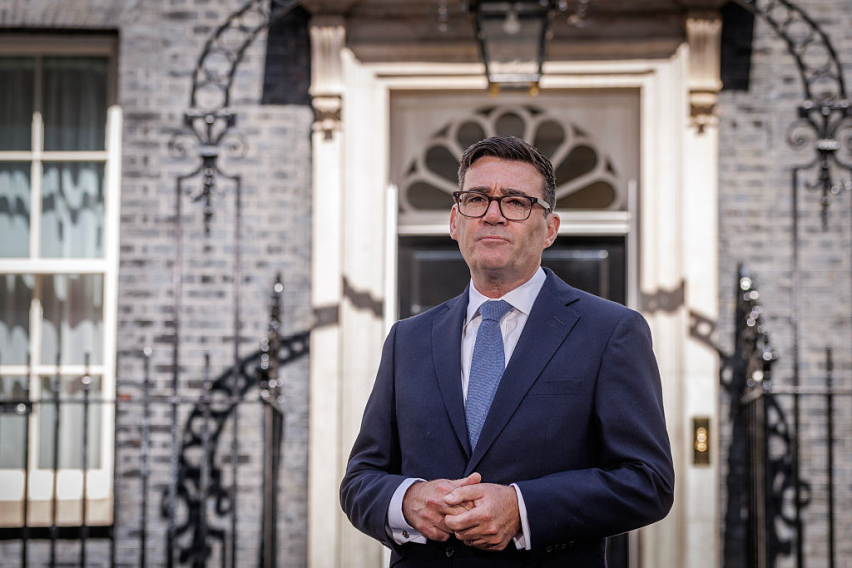
The new British Prime Minister, Andy Burnham, has indicated that assisted dying legislation should not be debated in Parliament yet, arguing that social care and palliative care need to be “fixed” first.
The original Terminally Ill Adults (End of Life) Bill would have permitted terminally ill, mentally competent adults with six months or fewer to live to receive assisted suicide under specified safeguards. However, the legislation stalled after extensive amendments and procedural delays in the House of Lords prevented it from advancing before the parliamentary session ended on May 13.
That bill was introduced by Labour MP Kim Leadbeater and cleared the House of Commons in June 2025. Once it reached the House of Lords, the legislation faced hundreds of proposed amendments, sparking prolonged debate and ultimately running out of time.
Lauren Edwards, the Labour MP for Rochester and Strood, is reintroducing an identical bill. While Edwards has stated she does not intend to invoke the Parliament Act - a rare constitutional mechanism that allows the Commons to bypass the Lords - opponents argue she is raising the possibility of the mechanism in order to pressure the upper chamber to approve the legislation.
Edwards called the progression of her private member's bill a “great privilege”.
“This long-overdue change to the law was supported by MPs during the last session of Parliament and was prevented from passing only by the decision of a minority in the House of Lords to talk it out and stop it coming to a vote,” Edwards said.
Claiming it is a “fundamental democratic principle” that the elected House of Commons should decide British law, Edwards argued that lawmakers owe a final decision to terminally ill people and their families.
“And I believe it undermines public trust in our democracy more widely if we cannot deliver on a measure that is supported by a very large majority of voters in all parts of the country,” Edwards added, noting that MPs across all parties had weighed the evidence carefully. “They considered the evidence presented during the lengthy committee sessions, consulted their constituents, and listened to those with personal experience of the injustice and cruelty in the law as it now stands.”
However, speaking on July 29 while launching a new initiative on social care reform, Burnham emphasized the need for a national care service and for lifting care workers to be “the best paid workers in society, not the least.”
When asked about his position on assisted suicide, the Prime Minister set out a clear priority.
“Personally, I think there's something that needs to happen first, and that's the fixing of the funding of palliative care and social care,” Burnham said.
“I think it is very challenging to introduce that wider debate in a context of people not receiving that care and having the peace of mind about that care. That's the way I see this, and that's the position that I will stick to.”
Burnham, a practicing Catholic, recognized the need to debate the issue of assisted suicide in the future. However, he affirmed the priority of providing well-funded palliative care before that can happen, according to a commentary from Christian advocacy group CARE (Christian Action, Research, and Education).
“He did not say anything specific about Lauren Edwards’ reintroduction of the Terminally Ill Adults (End of Life) Bill championed by Kim Leadbeater in the previous session of parliament,” noted CARE.
“This Bill is due to have its second reading in the House of Commons on 11th September. However, it is clear that assisted suicide is not the new Prime Minister’s focus at this time.”