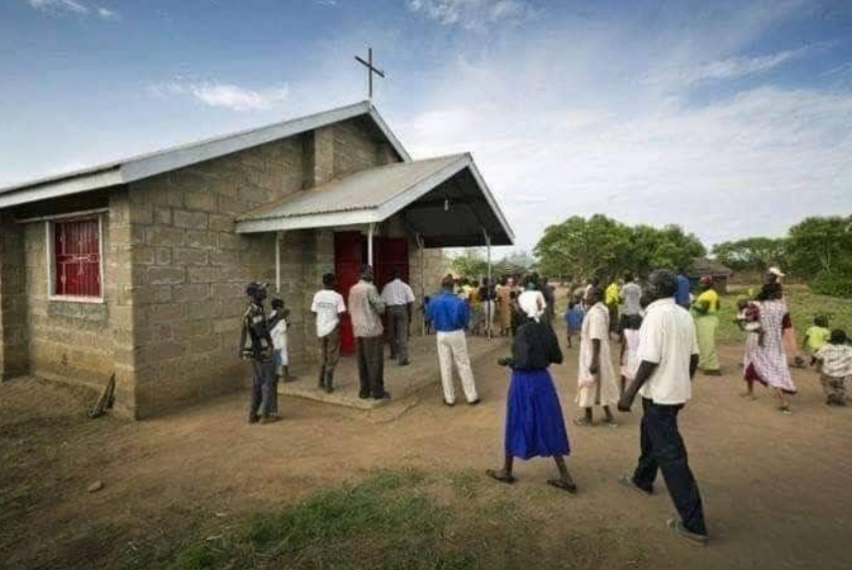
Churches in South Sudan’s Lakes State are struggling to maintain worship services and support displaced families following deadly clashes between rival communities that left dozens of people dead and hundreds of families fleeing their homes.
The violence erupted Oct. 8 in Rumbek, the capital of Lakes State, and escalated the following morning. Armed youths from the Nyang and Pakam communities fought in residential neighborhoods. The fighting followed earlier clashes in Nyangkot village on the outskirts of the town.
According to International Christian Concern (ICC), the violence has left Christian families grieving, disrupted church gatherings and raised fears of further attacks in communities already affected by longstanding disputes over cattle, grazing land and revenge killings.
“What began as a fight between communities has left the church wounded,” a local pastor working with ICC said. “Our people are afraid to gather. Some have stopped coming to services because they do not know when the next gunshot will sound.”
The pastor said places of worship that previously offered refuge and fellowship have become associated with uncertainty as congregations worry about their safety.
South Sudan’s Ministry of Information initially reported that approximately 71 people had been killed in the Oct. 9 violence, including four soldiers. However, subsequent assessments by military and local authorities produced lower figures.
According to Radio Tamazuj, Rumbek Central County Executive Director Padhil Maker reported 46 deaths, including three women and a girl, and 65 injuries. Army spokesperson Maj. Gen. Lul Ruai Koang separately estimated that about 40 people had died.
The United Nations Mission in South Sudan (UNMISS) reported Oct. 13 that state authorities had recorded 60 deaths and 78 injuries from the fighting on Oct. 8 and 9. Approximately 500 families were temporarily displaced.
UN peacekeepers deployed troops to protect civilians and critical facilities, including Rumbek State Hospital, following reports that wounded patients could face further attacks.
The mission also evacuated 17 humanitarian workers trapped in Amok Payam, north of Rumbek, amid concerns for their safety.
Churches caught in recurring violence
The clashes have added to the challenges facing churches in Lakes State, where longstanding tensions between communities have repeatedly erupted into armed confrontations.
Local officials told Radio Tamazuj that the latest violence followed fighting involving sections of the Pakam community before spreading to areas inhabited by the Nyang community.
The conflict escalated into retaliatory attacks, forcing residents to abandon their homes and seek safety in nearby villages.
ICC reported that pastors were struggling to comfort grieving families while addressing fears among congregation members who no longer felt safe attending services.
“The causes are old: land, cattle, revenge,” another pastor told ICC. “But every time these fights erupt, it is the church that pays a heavy price.”
The pastor described families being separated by violence and children who previously attended Sunday school now hiding in fear.
ICC said churches were suffering alongside other residents as violence disrupted worship, displaced families and undermined efforts to maintain peaceful relations between communities.
The report also highlighted the appointment of Alapayo Manyang Kuctiel, a former Archbishop and Bishop of the Episcopal Diocese of Rumbek, to a government role involving gender and social welfare after his retirement earlier this year.
According to ICC, some residents hope his pastoral experience will contribute to efforts to support vulnerable families and communities affected by violence.
Church leaders call for reconciliation
The Rumbek clashes came days after the South Sudan Council of Churches warned about deteriorating security across the country.
In an Oct. 6 statement reported by Radio Tamazuj, church leaders expressed concern about killings, abductions, displacement and armed youth mobilization in several regions, including Upper Nile, Jonglei, Unity and Warrap states.
Justin Badi Arama, primate of the Episcopal Church of South Sudan, was among the leaders raising concerns about attacks on civilians and restrictions on humanitarian access.
“The suffering of our people has reached a point where silence is no longer an option,” the church leaders said.
They urged the government, armed groups and community leaders to protect civilians, end retaliatory attacks and pursue dialogue rather than violence.
South Sudan has experienced recurring conflict since gaining independence in 2011. A civil war that began in 2013 killed hundreds of thousands of people before a 2018 peace agreement reduced much of the large-scale fighting. However, local conflicts and insecurity have continued.
In Rumbek, ICC said churches are now facing the difficult task of mourning those killed, supporting displaced families and encouraging reconciliation between communities.
“We bury our dead and try to comfort the wounded, but the fear remains,” a local pastor told ICC.
The pastor said churches remain embedded in the communities affected by the fighting and continue to pray for peace despite the insecurity.