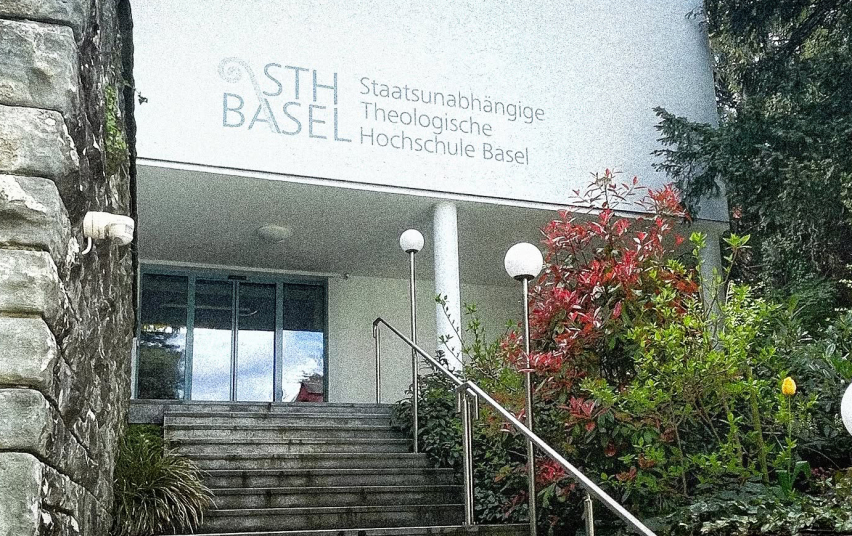
STH Basel, a private Protestant theological university in Switzerland, lost its accreditation as a university-level institution Monday after choosing not to take its case to the country's highest court. The school says it has already started preparing a fresh application.
In a statement released ahead of the Oct. 12 deadline, STH Basel said its leadership decided against appealing to the Federal Supreme Court and would instead put its limited resources into a new accreditation process. That decision allowed the Swiss Accreditation Council's withdrawal of accreditation to become legally binding when the appeal period ran out.
The school, based in Riehen on the outskirts of Basel, said teaching and research will continue and that it will keep awarding its bachelor's, master's and doctoral degrees in theology.
Switzerland's Federal Administrative Court dismissed STH Basel's appeal against the withdrawal on Sept. 7, Christian Daily International previously reported, citing the Swiss evangelical news portal Livenet.ch. At the time, the school had not said whether it would appeal further.
What changes for students
Without accreditation, STH Basel may no longer describe itself as a "university" theological institution under Swiss law. During the period without accreditation, it will use a title that translates as "academic theological institution of higher education," the statement said.
The school acknowledged that students can no longer automatically claim rights tied to an institution's accreditation. Transferring to other schools will become harder, and recognition of STH Basel degrees is no longer guaranteed.
Other universities and churches remain free to recognize the school's degrees, according to the statement. Under Swiss law, STH Basel's right to issue diplomas and award academic titles does not depend on accreditation, the school said. It will continue to confer the habilitation, a post-doctoral qualification required for professorships in German-speaking academia.
Accreditation is also the gateway to state funding in Switzerland. STH Basel said the loss has no effect there because it never applied for public money, in order to remain independent of the state.
School disputes council's findings
The Swiss Accreditation Council had found four conditions insufficiently met, according to STH Basel. The council said the school's strategy was not adequately tied to its quality assurance system, that it was unclear how collected data informed strategic decisions, and that course evaluations did not complete the feedback cycle.
The fourth concern was gender equality, chiefly because all of the school's professors are men, the statement said.
STH Basel maintains that it largely met the requirements and has since addressed the remaining gaps. Its new Strategy 2030 links planning explicitly to quality assurance and sets out which bodies make which decisions based on which data, the school said. Course evaluation results are now sent to students in writing and discussed with them in person.
On gender equality, the school said academic quality must take priority over other factors in hiring professors. It said Leonie Schweizer is serving as acting holder of the chair of philosophy, religious studies and missiology on the basis of her academic record and is under consideration for a permanent appointment to that chair.
The school stressed that none of the criticisms concerned its "core work." The accreditation process did not question the quality of its teaching or research, STH Basel said in the statement.
Background and next steps
STH Basel received institutional accreditation in 2022 for a term running to 2029, subject to conditions it was required to meet by a deadline. The agency that reviewed its progress identified remaining shortcomings but recommended that the council grant an extension.
The council instead ordered the accreditation withdrawn outright in June 2025, CDI reported last month. In upholding that decision, the Federal Administrative Court found that the public interest in protecting accreditation as a mark of quality outweighed the school's interest in keeping it.
The Immanuel Foundation, which sponsors the school, had told the court that losing accreditation could threaten STH Basel's existence and sharply reduce enrollment.
Founded in 1970, the school was recognized as a university-level institution by the Swiss University Conference in 2014. Reformed church bodies in Switzerland began recognizing its degrees the following year, opening a path for graduates into pastoral ministry.
STH Basel said it will help students, doctoral candidates and habilitation candidates whose entry into professional work is hindered by the loss of accreditation. It plans to deepen cooperation with partner universities and is seeking transitional arrangements with institutions that could employ its graduates.
Work on a new accreditation application began immediately, according to the school. Matthias Mangold will join STH Basel on Jan. 1, 2027, as accreditation project manager in a 30 percent part-time role.