
Parents and church pastors in the United Kingdom could face court trials, hefty fines and prison time under a proposed ban on practices aimed at changing sexual orientation or identity, an advocacy group warned.
The Labour government published the Conversion Practices Draft Bill on Thursday (June 25). The legislation, which follows similar proposals introduced by the previous Conservative government, aims to criminalize abusive practices to change sexual orientation and introduce civil protection orders.
Under the draft text, the law would apply to any conduct directed at people with the intention of changing or suppressing their sexual orientation or transgender identity.
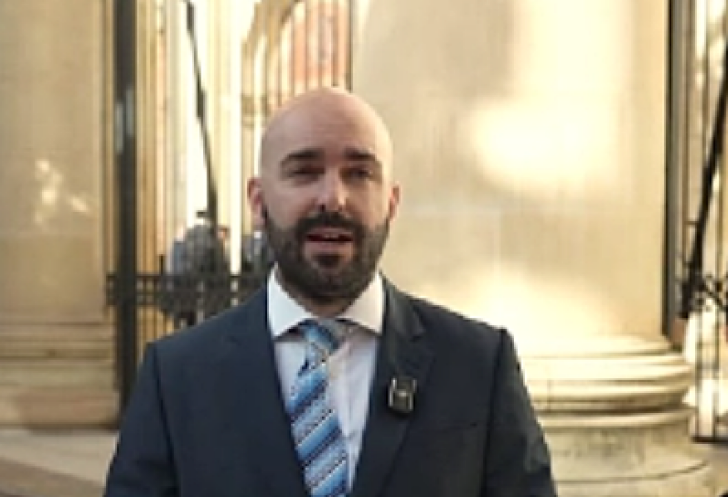
Paul Huxley, communications manager for Christian Concern, said the reality of a ban on practices to change sexual orientation has arrived, noting that the political landscape has shifted significantly.
“Gone are the times when everyone nodded along to the idea,” Huxley wrote in a commentary for the organization, adding that public opposition to the legislation has surged since the prior Conservative government first floated the policy. “Politicians, commentators and campaigners are panning the bill. No more do people say, ‘Yes, conversion therapy is terrible, but please carve out an exemption for [whatever they care about].’”
Huxley said both major political parties seek to make the legislation trans-inclusive, which he argues leaves parents vulnerable.
“That means that the label ‘conversion practice’ can be used for someone who seeks to help someone reconcile their feelings to their body – to help them accept their body rather than to go down the route of trans ideology, mutilating their body with puberty blockers, hormones, breast binders and reassignment surgery,” Huxley said.
Medical doctors would receive an exemption under Labour’s plan, provided their care does not “fall well below professional expectations.” The bill, however, does not explicitly shield parents.
Huxley said it is “very easy” to see how parents who guide or advise their children, especially teenagers, could face criminal accusations if parliament passes the bill into law. The bill relies on an all-encompassing definition of conversion practices, he said.
“The language here is very long-winded but amounts to any attempt of a person to direct a person’s sexuality or gender identity, or to make them believe that this has happened,” he said.
The government does not intend to ban all conversations regarding identity, only those deemed “abusive.” The draft law determines abuse by examining all circumstances of a case, specifically looking for words or behavior of a sexual nature; violent or threatening words or behavior; controlling or coercive words or behavior; the use of economic pressure; and the use of psychological or emotional pressure.
“Just about everyone would read this list and say they’d never consider doing any of the above,” Huxley said. “But it’s easy to see how some of these phrases could be twisted against parents in particular.”
Huxley warned that the daily dynamics of family life could trigger legal scrutiny. Because parents provide financial support and hold household authority, standard parenting boundaries could be reinterpreted under the law.
“A rebellious teenager who starts to identify in a different gender could very easily accuse their parents of abusive conversion practices,” Huxley said. “Any rules laid down about what goes on in the house, rules about how the teen dresses, even refusing to use a chosen name could be called controlling or coercive words and behaviors.”
Restricting a teenager’s spending money could fall under “economic pressure,” while instructing siblings to use a child’s legal name and biological pronouns could be labeled “psychological or emotional pressure,” he added.
While Huxley doubts many parents will end up in prison due to high standards for evidence, he fears the legal process itself will devastate families.
The criminal offenses carry an unlimited fine and up to five years in prison, but prosecutors must prove the actions caused “serious harm” to physical or mental health, or “serious alarm or distress” that disrupted day-to-day life.
“In the case of a parent acting in the ways mentioned above, this would be hard to prove,” Huxley said. “But the bill also introduces conversion practice protection orders where courts can put in place orders to supposedly protect people deemed to be in danger of such harm.”
He warned that courts could issue these civil protection orders based on a mere claim that future harm might occur, without requiring proof of actual damage.
Ordinary prayer and conversations with a trusted pastor, counselor or therapist do not inherently constitute abuse under the bill’s five criteria, he said, but he expects activists would try to stretch the legal definitions of abuse.
Huxley cited the ban on psychological or emotional pressure as a primary concern for church leaders.
“For example, a good, faithful Christian pastor teaches that sexual faithfulness means not having gay sex as part of his ordinary ongoing ministry,” Huxley said. “Someone in the church experiences same-sex attraction and reaches out for help. They receive prayer and some ordinary Christian discipleship. But this is interpreted as happening under psychological and emotional pressure because of the church’s teaching that gay sex is a sin.”
Huxley noted that some individuals who voluntarily receive pastoral prayer later reject Christianity and blame their subsequent anxiety or depression on their past church experiences. He fears the bill will become “a charter for pastors to be put under the pump for this kind of normal pastoral support.”
“I suspect it would be very difficult for a pastor to be convicted in this way, but not before they are dragged through months or years of trials,” Huxley said.
He pointed to the case of Matthew Grech, a Christian singer from Malta. A Maltese judge found Grech not guilty of unlawfully advertising conversion therapies, ending a three-year legal battle.
Despite his acquittal, Grech suffered immense financial and personal strain, and the case remains subject to appeal, Huxley noted.
“Pastors should expect the same kind of treatment if accused of conversion practices,” Huxley said. “This bill will stop people being able to access support as they seek that change. It will be used to punish pastors and parents for supporting people in normal, responsible ways.”








