The National Association of Evangelicals has praised a U.S. government announcement directing nearly $2 billion in health and humanitarian funding through faith-based organizations, calling it an encouraging sign that global compassion work will remain a national priority.
The State Department announced on Aug. 6 that the investment represents the largest allocation of global health foreign assistance to faith-based organizations in more than 20 years. Awards will support services in more than 20 countries and are expected to reach 7 million people across 16 humanitarian crises.
"Faith-based hospitals, clinics, community health workers and humanitarian organizations combine trusted local relationships with compassionate service," NAE President Walter Kim said in a statement issued Aug. 10.
Galen Carey, the NAE's vice president of government relations, said the announcement signals that such partnerships will endure. "The administration's announcement is a big boost to those efforts and an encouraging sign that lifesaving global health partnership will remain a national priority for years to come," he said.
The funding is divided into two streams. Approximately $1.4 billion is designated for health services — including an $850 million, five-year Faith and Community Initiative Award to World Vision and its consortium partners, along with $570 million channeled through agreements with country governments. That portion is projected to strengthen more than 2,500 faith-based hospitals and clinics across 17 countries and fund the training of more than 30,000 community health workers. Programs supported include vaccinations, HIV/AIDS treatment, Ebola response and nutrition initiatives.
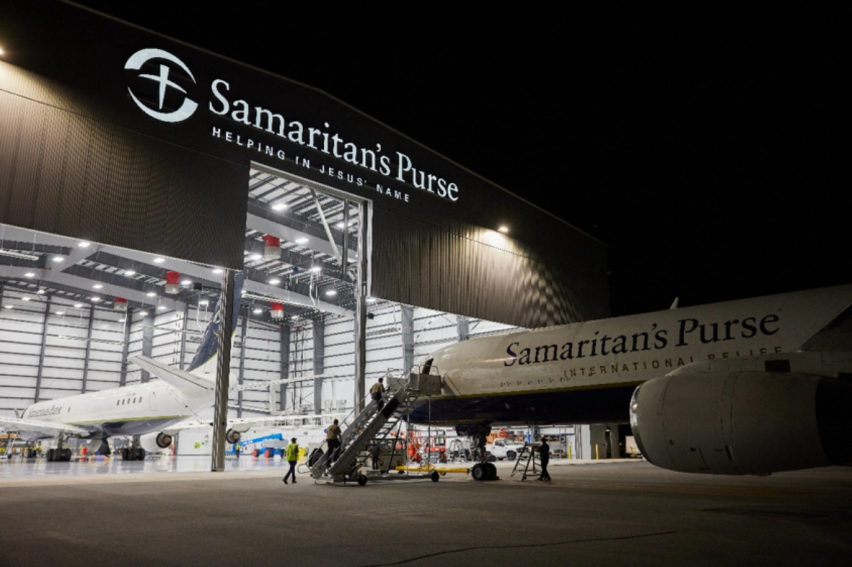
The remaining $538 million will go toward humanitarian assistance through Samaritan's Purse and a World Vision–Compassion International consortium. More than $100 million is immediately available for natural disaster response across 23 disaster-prone countries, the State Department said.
One notable feature of the awards is a requirement that at least 80 percent of resources go directly toward frontline health services. That compares with the 35 to 40 percent the State Department has historically allocated in comparable programs — a shift the NAE indicated reflects the efficiency and community embeddedness that faith-based organizations bring to global health delivery.
The announcement comes after a turbulent period for U.S. international assistance. Following significant changes to foreign aid programs in 2025, the NAE issued a statement titled "Compassion for a World in Need," urging evangelical Christians to support global compassion ministries and calling on Congress to preserve poverty-focused aid delivered through faith-based partners. The Aug. 6 State Department announcement was received by the organization as a positive response to those concerns.
The NAE has long maintained that faith-based organizations occupy a distinct position in global health and humanitarian work — not only as service providers, but as institutions embedded in local communities with relationships that government agencies cannot replicate. Kim and Carey both framed the funding as a recognition of that role, and as an investment in long-term, trust-based partnerships rather than short-term contracting.