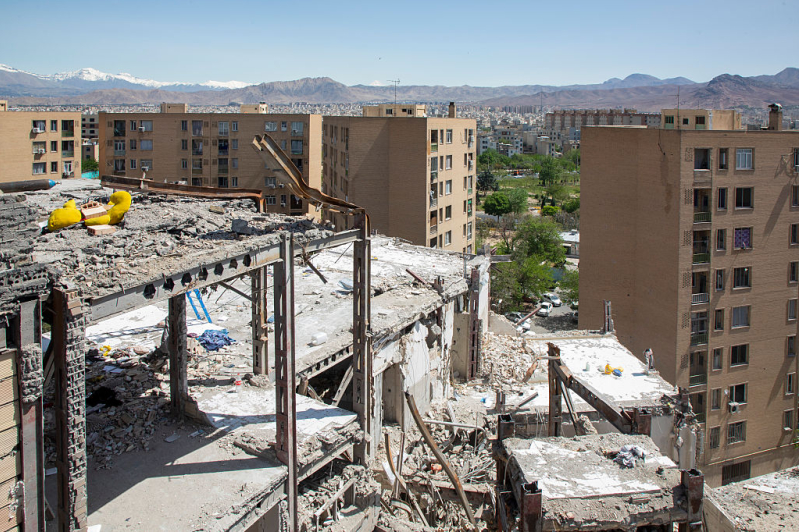
The United States and Iran announced a preliminary agreement Sunday to end their months-long war and reopen the Strait of Hormuz to global shipping, according to Reuters, though the deal leaves Iran's nuclear program and other contested issues to future negotiations.
The memorandum of understanding, brokered partly through Pakistani mediation, is set to be signed Friday in Switzerland.
U.S. President Donald Trump declared the agreement complete in a Sunday evening post on his Truth Social platform. "The Deal with the Islamic Republic of Iran is now complete," he wrote, adding that ships should prepare to move as the strait reopens Friday.
The conflict began in February, when U.S. and Israeli forces launched coordinated strikes on Iran following the regime's violent crackdown on domestic protests that saw thousands of civilians killed.
Pakistani Prime Minister Shehbaz Sharif, whose government served as a mediator, announced the ceasefire deal early Monday local time. He said it called for "the immediate and permanent termination of military operations on all fronts, including in Lebanon."
Lebanon has been among the most contested elements of the negotiations. The Israeli military launched an offensive against the Iran-backed Hezbollah militant group, which opened fire on Israel in support of Tehran on March 2.
Iran's Foreign Minister Abbas Araqchi said Israel must fully halt its attacks on Lebanon and wrote on Telegram that Washington bears responsibility for implementing the framework. Iran's Supreme National Security Council said military operations on all fronts would end permanently beginning Monday night.
Israel had yet to officially respond to the agreement as of Sunday. Defense Minister Israel Katz said Israel would resist any pressure to withdraw from areas it occupies in southern Lebanon, citing lessons from the Oct. 7, 2023, Hamas attacks. "Prime Minister Netanyahu made this clear to U.S. President Trump and other senior American officials," Katz said.
Iran's deputy foreign minister, Kazem Gharibabadi, told Reuters that a broader agreement — including sanctions relief for Iran — would be negotiated during a 60-day ceasefire. The future of Iran's nuclear program, a central concern for several Western governments, will be addressed in those later talks, sources previously told the news agency.
Before the announcement, senior U.S. and Iranian officials gave differing accounts of the draft terms. An Iranian official said it includes $25 billion in released frozen assets and permission for Iran to dilute its enriched uranium inside the country. A U.S. official said it would ultimately require the full dismantling of Iran's nuclear program. Iran denies pursuing a nuclear weapon.
Britain, France, Germany and Italy issued a joint statement saying they were prepared to lift sanctions on Iran in exchange for "clear, verifiable steps" to limit its nuclear activities. China also welcomed the agreement.