
The Archbishop of Canterbury has promised “action” in redressing the evils of the historic transatlantic slave trade.
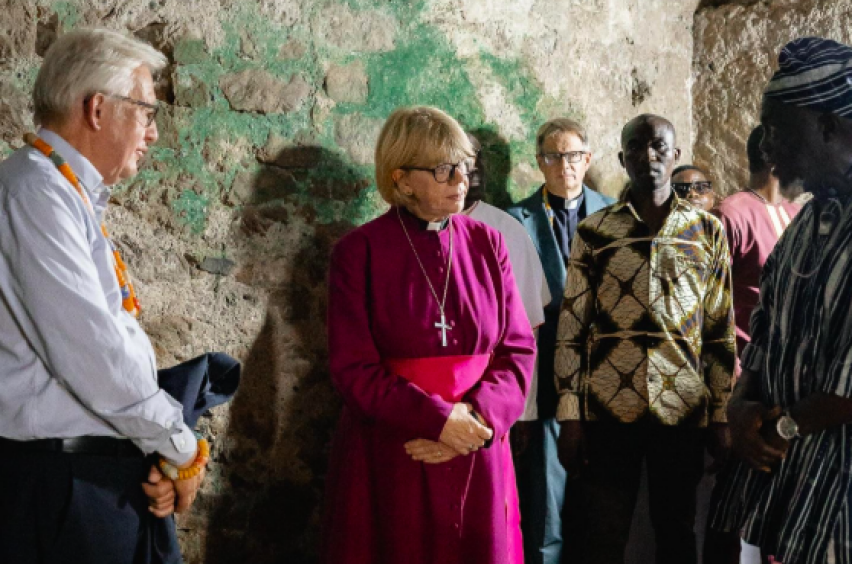
The Most Rev. Sarah Mullally commented on the issue during a visit to Cape Coast Castle on Sunday (July 26), a former slave castle run by the British in Ghana. She spent time in prayerful contemplation at the shore where slave ships once left for the Americas and contemplated the horrors suffered by African slaves.
"We played a part in the transatlantic slave trade. That is clear. Part of the Christian belief in repentance is about action, so we are putting in place action to support those communities that feel the legacy of the slave trade," she said, as quoted by the BBC.
Mullally also walked through the “Door of No Return” where enslaved Africans were forced to walk onto ships, never to return to their homes. She prayed there too.
Lambeth Palace said the archbishop saw the women’s prison cells, and the place where enslaved men and women were branded. She prayed in a former Anglican chapel above the dungeons where male prisoners were kept in appalling conditions. Today it is an educational library and chapel, and stands as a “painful symbol of the Church’s involvement in the transatlantic slave trade,” said the palace.
Mullally felt it impossible not to sense the horror at the conditions suffered by the slaves.
"We have a God who loves each one of us, who created each of us with an individual value and worth, and yet that was not recognised here,” said Mullally.
"I pray not only in lament for the Church’s involvement in the slave trade, but also for hope — hope that the God of healing can bring justice and reconciliation to all who are still impacted by its legacy. In the name of Jesus Christ, who came to set people free, I pray that we have the courage to continue our journey of repentance, and to strive for a world in which all of God's children are treated with dignity."
The archbishop also “broke soil” for a new pilgrim hostel provided for Africans from the diaspora to visit Ghana and learn more about the heritage of slavery. It is a project run by the Anglican Church of Ghana and supported by an Anglican mission agency USPG (United Society Partners in the Gospel).
The United Society Partners in the Gospel, an Anglican mission agency formerly known as the Society for the Propagation of the Gospel, operated two sugar plantations in Barbados from 1710 to 1838 using enslaved labor.
The organization gained control of the estates following a bequest from plantation owner Sir Christopher Codrington, as previously reported by Christian Daily International. USPG said it financially benefited from forced labor on the property for more than a century, continuing past the 1834 legal abolition of slavery in the British Caribbean.
USPG has acknowledged its "disgraceful links to the slave trade" and launched the Codrington Reparations Project in partnership with the Codrington Trust in September 2023. The multimillion-dollar initiative aims to address historic injustices, economic disparity and social challenges in the region resulting from the legacy of chattel slavery.
The visit to the slave castle took place during the archbishop’s first pastoral visit to Africa since her installation and she has visited Anglicans in both Ghana and Cameroon.








