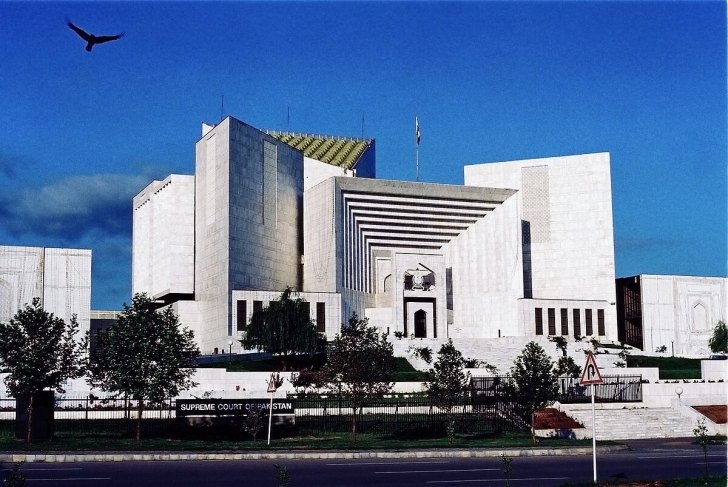
Leading human rights lawyers Imaan Zainab Mazari-Hazir and her husband, Hadi Ali Chattha, on Thursday (Sept. 17) were re-arrested hours after Pakistan’s Supreme Court suspended their prison sentences and ordered their release on bail in a controversial social media posts case.
Islamabad police arrested the couple again in connection with a separate case registered at Kohsar Police Station and produced them before an anti-terrorism court (ATC) late that night. ATC Judge Abul Hasnat Muhammad Zulqarnain rejected a police request for 30 days of physical remand and sent the couple to jail on judicial remand for 14 days.
The case concerns allegations that Mazari-Hazir and Chattha participated in an unlawful assembly, chanted anti-government slogans and blocked roads. The case was registered at Kohsar Police Station in March 2025. The re-arrest came only hours after the Supreme Court suspended the couple’s convictions in the social media case and ordered their release on bail.
A two-judge Supreme Court bench comprising Justice Naeem Akhtar Afghan and Justice Ishtiaq Ibrahim granted bail against surety bonds of 200,000 Pakistani rupees ($720) each, pending the Islamabad High Court’s final decision on their appeals. The court also suspended the operation of their Jan. 24 convictions.
The re-arrest prompted criticism from the couple’s family, lawyers and rights advocates. Mazari-Hazir’s mother and former federal minister for human rights, Shireen Mazari, condemned the development in an X post, saying it demonstrated that the cases against the couple were driven by “vengeance” rather than justice.
She said the two lawyers had been taken from inside Adiala Jail before the paperwork for their release could be completed, and alleged that due process had not been observed in the cases against them.
Amnesty International also criticized the re-arrest. Babu Ram Pant, the organization’s deputy regional director for South Asia, said the action appeared to show that the charges were being used to punish the couple for their human rights work. He called for their immediate and unconditional release.
The arrests also drew criticism from lawyers and rights advocates on social media.
Lawyer Rida Hosain said the couple’s continued incarceration sent a broader message about the rule of law.
“No court order makes a difference if the state wants you in jail,” she said on X. “This should be frightening for any person that believes in the rule of law,” she added.
Digital rights advocate Usama Khilji wrote, “Welcome to Pakistan, where law of the jungle is supreme.”
Lawyer Reema Omer described the development as “heartbreaking and terrifying,” saying the couple had been sent to judicial custody for allegedly participating in an “unlawful assembly” on the same day that the Supreme Court suspended their PECA (Prevention of Electronic Crimes Act) sentences and ordered their release on bail.
Earlier, a Christian attorney had welcomed the Supreme Court’s decision to suspend the couple’s sentences, noting that Chattha has represented Muslims and religious minorities accused under Pakistan’s blasphemy laws.
Mazari-Hazir, 32, has represented victims of enforced disappearances, custodial abuse and alleged extrajudicial killings, as well as other human rights cases.
In several high-profile blasphemy cases, Mazari-Hazir and Chattha have challenged allegations they said were motivated by financial disputes, property conflicts or personal enmity.
The couple were initially arrested on Jan. 23 in connection with a separate case involving a protest outside the Islamabad High Court and alleged manhandling of the president of the Islamabad High Court Bar Association.
An Islamabad sessions court on Jan. 24 sentenced them to a combined 17 years in prison under several provisions of PECA. Mazari-Hazir received 10 years under Section 10 for cyber terrorism, five years under Section 9 for glorification of an offence and two years under Section 26-A for allegedly disseminating false and fake information. The sentences were ordered to run concurrently.
The social media case arose from a complaint filed on Aug. 12, 2025, by an investigating officer of the National Cyber Crime Investigation Agency (NCCIA) in Islamabad.
The complaint accused Mazari-Hazir of disseminating and promoting narratives allegedly aligned with hostile terrorist groups and proscribed organizations. Chattha was accused of reposting some of her social media posts.
According to the First Information Report, the couple had held security forces responsible for cases involving missing persons in Khyber Pakhtunkhwa and Balochistan provinces. It also accused them of portraying the armed forces as ineffective against banned organizations, including the Baloch Liberation Army and Tehreek-i-Taliban Pakistan.
The couple denied the allegations and challenged their convictions before the Islamabad High Court on Feb. 7.
When the high court heard their appeals and applications seeking suspension of their sentences on Feb. 19, it issued notices to the respondents but declined to suspend the sentences. They subsequently approached the Supreme Court on April 30, challenging the high court’s refusal to suspend their sentences. Following Supreme Court intervention, the Islamabad High Court on July 25 declared the couple’s applications seeking suspension of their sentences admissible.
Mazari-Hazir later returned to the Supreme Court seeking an early hearing of the challenge against the high court’s February order. The Islamabad High Court is scheduled to hear the couple’s appeals against their convictions on Sept. 23.