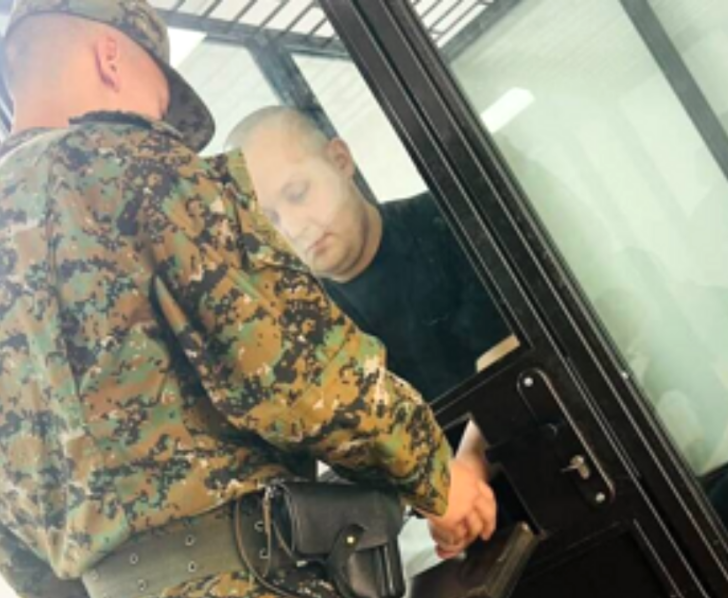
After deporting a pastor earlier this year, authorities in Kyrgyzstan launched a heavy crackdown against his church, holding five members in pre-trial detention for months before convicting them of “extremism,” according to rights group Forum 18.
In hearings in August and September, judges at Bishkek’s Birinchi May (Pervomaisky) District Court reduced the charges against the five members of the True and Free Reform Seventh-day Adventist Church, a Soviet-era, pacifist movement distinct from the worldwide Seventh-day Adventist denomination, and sentenced them to pay fines, Forum 18 reported.
Prosecutors had sought prison terms of up to seven years, but judges released the five members of the church, located in the village of Lenin in Alamudun District, Chuy Region, north of the capital city of Bishkek, and ordered them to pay fines equal to one or two weeks’ average wages.
The church refuses on principle to seek compulsory state registration, rendering its worship illegal under Kyrgyz law.
The lighter sentences frustrated the lead investigator, who wanted to keep the church members in prison.
“I would keep them in prison if it depended on me,” Investigator Adilet Asanbayev of the Birinchi May District Police told Forum 18 on Oct. 13. “The court made the decision to release them, but they were still fined.”
In March 2025, the Alamudin District Court in Chuy Region banned the church as an “extremist” organization following a civil suit brought by prosecutors and National Security Committee (NSC) secret police, according to Forum 18. The Supreme Court rejected the church’s appeal in August 2025, making the ban permanent and forcing the congregation to halt services at its meeting hall in Lenin village.
The latest campaign escalated after the NSC arrested the church leader, the Rev. Pavel Shreider, in November 2024. A Bishkek court sentenced Pastor Shreider, who was born in Kyrgyzstan but holds Russian citizenship, to three years in prison. The Supreme Court commuted his sentence to a fine in March 2026, and secret police officers escorted him to the border and deported him on April 9.
Four days after his deportation, Investigator Asanbayev opened a fresh criminal case based on a police Counter Extremism and Illegal Migration Service report. The officer alleged that church members gathered on Saturdays for worship in private homes across Bishkek and nearby villages.
Investigators deployed wiretaps, video surveillance and phone interceptions, according to Forum 18. On June 6, police raided 10 church members’ homes, seizing religious books, internal documents, and mobile phones, the group reported.
State forensic examiners used the church’s Christian pacifism as evidence of subversion. In a June 12 report, the Justice Ministry’s State Service for Judicial Expert Analysis concluded that church literature promoted insubordination by teaching members to refuse military service, Forum 18 reported.
A state expert for the prosecution quoted from a book seized from the church, “When in the army, people cannot be simultaneously faithful to their faith and to the orders of their superiors,” according to the rights group.
On June 17, the Birinchi May District Court remanded five members to pre-trial detention: Yevgeny Zhuravsky, Igor Kozlov, Sergey Kozlov, Olga Selova and Valeriya Yantsen. District Prosecutor Bakytbek Toktogonov later indicted them under Criminal Code Article 332, Part 2, Point 2, “producing and distributing extremist materials by prior conspiracy,” with conviction carrying up to seven years in prison. Police also accused Zhuravsky of coordinating the private home gatherings.
When the cases reached trial in August and September, judges tried each defendant individually and reclassified the charges to Criminal Code Article 331, Part 5, participation in a banned extremist organization.
Judge Iskander Sargaldakov convicted Selova on Aug. 18, fining her 20,000 soms ($229) and ordering her release. On Sept. 9, Judge Tilek Turdukulov convicted Igor Kozlov, imposing the same 20,000-som fine and releasing him. Eight days later, Turdukulov convicted Zhuravsky, ordering his release after assessing a 10,000-som fine ($115).
The court also convicted, fined and released Yantsen in mid-September, though her family withheld specific case details for fear of state retaliation. The final trial concluded on Sept. 28, when Judge Madamin Azimzhanov convicted Sergey Kozlov, fining him 20,000 soms and ordering his release after more than three months in detention.
All five signed travel restrictions barring them from leaving their residences while appealing the verdicts to the Bishkek City Court.
State officials declined to explain how Christian pacifism or private religious reading constituted extremism, according to Forum 18.
When Forum 18 asked why the court fined rather than acquitted citizens for possessing religious literature, Birinchi May District Court Chair Chyngyzbek Berdymuratov refused to answer.
“No one has the right to demand from judges an account on any concrete case,” Berdymuratov wrote to Forum 18, warning that Kyrgyz law prohibits and punishes outside interference in judicial matters.
Officials at the NSC secret police and the National Agency for Religious Affairs similarly refused to comment, referring inquiries to the Foreign Ministry.