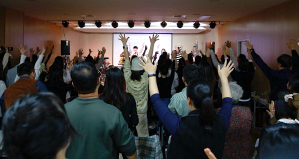
Following China’s release from prison of Pastor Ezra Jin, advocates are urging the release of eight pastors of his church ahead of a U.S.-China summit next week, even as an attorney representing the congregation seeks asylum.
Ruth Wang, a partner at VDoor Law Firm, was visiting Japan with her family in August when authorities in China called requesting to meet her, according to an interview she gave The Associated Press. Wang replied that she was outside the country and decided not to return to Beijing.
Wang, temporarily in Taiwan while she considers resettlement options, told The AP that Chinese authorities are now pressuring her and her colleagues to dissolve the firm or face forced closure. Officials have revoked the license of the firm’s founder, Zhang Kai, and prohibited him from leaving the country, and suspended other attorneys at the firm from practicing for six months, Wang told The AP.
She added that judicial authorities have asked attorneys at the firm to stop representing Zion Church cases and leave the company.
Officials in Taiwan have allowed her to remain temporarily but cannot accept cases of political asylum from mainland China due to tensions between the Chinese government and the ruling Democratic Progressive Party, The AP reported, noting that Taiwan does not have a formal refugee policy.
Among resettlement options Wang is considering are studying in the U.S. or Canada as a way for her family to relocate or applying for asylum abroad, she told The AP.
Uncertain whether there is any country that can accommodate her and her family, she referenced the biblical book of Ruth, noting how God arranged for Boaz to help Ruth when she was facing an uncertain future. Wang told The AP that she also believes “that God will give such a person.”
China targeted Zion Church in October, arresting 18 members, including its founder, Pastor Jin. He regained his freedom over the summer after U.S. President Donald Trump raised the issue during his visit with Chinese President Xi Jinping in May. Pastor Jin founded Zion Church in 2007, and in 2018 authorities closed its worship venue, forcing the congregation online and related churches to alternative venues.
Zion Church is among the largest unregistered “house churches” in China, congregations that refuse to submit to increaingly oppressive government controls. The AP cited Sean Long, a Chinese Zion Church pastor now studying in the United States, as estimating Zion’s membership at about 5,000 people in more than 100 worship sites in apartments, restaurants, and other venues in about 40 Chinese cities.
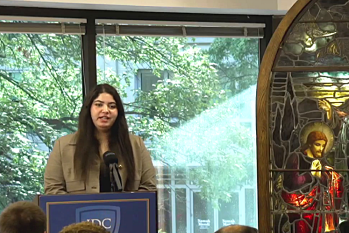
On Tuesday (Sept. 14), the U.S. Commission on International Religious Freedom (USCIRF) called on Trump to urge Xi at a planned Sept. 24 summit to release the other leaders of Zion Church, among other prisoners of conscience or religion. Still detained are pastors Wang Lin, Yin Huibin, Wang Cong, Lin Shucheng, Liu Zhenbin, Gao Yingjia, Elder Wang Zhong and Wu Qiuyu.
“In releasing Pastor Jin, President Xi showed that he has the power to release FoRB [Freedom of Religion or Belief] prisoners if he so desires – and indeed he has an obligation to do so under international law,” said Vice Chair CeCe Heil. “USCIRF again asks President Trump to seize the opportunity during his upcoming summit with President Xi to call for the release of Gulshan Abbas, Ekpar Asat, Pastor Gao Quanfu and his wife Pang Yu, Jimmy Lai, the Panchen Lama Gedhun Choekyi Nyima and his family.”
USCIRF is also calling on Trump to urge the Chinese government to provide a passport to Pastor John Cao, a U.S. permanent resident, whose documents were confiscated following his release from prison in China in 2024.
Pastor Cao was imprisoned because of his religious identity and missionary work, according to USCIRF. On March 5, 2017, the Menglian County Police of Yunnan Province detained Cao, a pastor, humanitarian worker, and U.S. permanent resident, on the border between China and Burma, where he had engaged in humanitarian work since 2013.
“Human rights activists believed Cao was targeted for his religion since among the individuals crossing the border in Cao’s group, only Cao and his other Christian colleague were detained,” USCIRF states on its website.
On March 28, 2017, Cao was formally arrested and charged with “illegally crossing the border.” On March 22, 2018, he was sentenced to seven years in prison for allegedly “organizing illegal border crossings,” USCIRF repored, noting that on July 25, 2019, the Pu’er Intermediate Court upheld his conviction and sentence.
“In September 2019, the U.N. Working Group on Arbitrary Detention concluded that Cao ‘was singled out due to his Christian faith, and that the measures were implemented against him in a manner that constituted profiling and discrimination on the basis of Mr. Cao’s religious identity,’” according to USCIRF.
Cao was released from prison after completing his sentence in March 2024.
“During detention, authorities subjected Cao to inhumane living conditions and denied him adequate medical care,” USCIRF repored. “Cao suffers from severe back pain, headaches, inflammation, and dental issues and has experienced significant weight loss.”
At 67 years old, after his release, he was diagnosed with stage 4 cancer. Authorities denied him a passport by enforcing Article 14 of the CCP Passport Law, preventing him from returning to his family and receiving cancer treatment in the United States. Cao is married with two children. His wife and children are U.S. citizens.
China was ranked 17th on Open Doors’ 2026 World Watch List of the 50 countries where it is most difficult to be a Christian.