Malawi’s government has defended its economic recovery efforts after the Church of Central Africa Presbyterian (CCAP) called for urgent reforms, greater accountability and relief for households struggling with rising living costs and shortages of essential goods.
The government’s response came amid renewed fuel shortages, foreign exchange constraints and concerns about the delivery of public services, prompting church leaders to question whether economic recovery is improving the lives of ordinary Malawians.
Information and Communications Technology Minister Shadric Namalomba said on Oct. 14 that the government had taken note of concerns raised by the CCAP and its Church and Society programs.
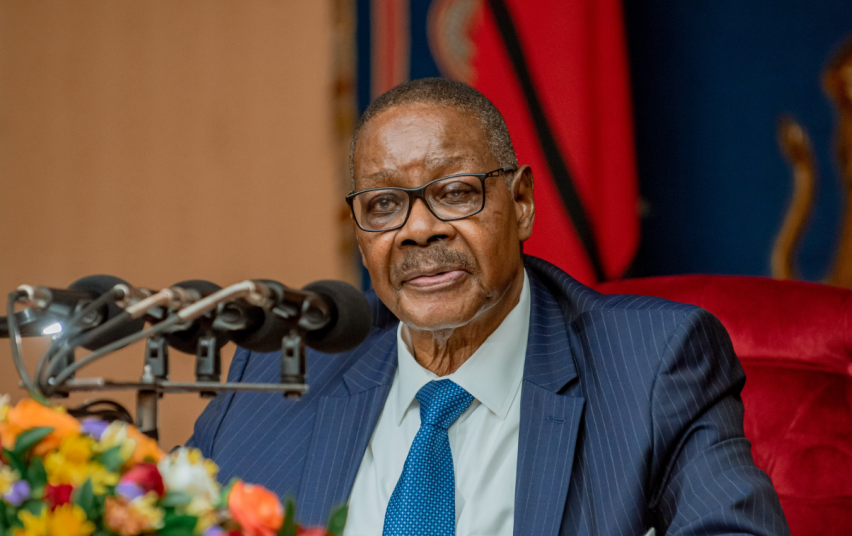
The minister said the administration of President Arthur Peter Mutharika remained focused on what it calls the “Four Fs” of food, fuel, fertilizer and foreign exchange, describing the recovery trajectory as encouraging.
The government welcomed the church’s contribution to national development and called for patience, unity and collective effort as the country works to address its economic difficulties, Nyasa Times reported.
The CCAP, however, argued that policy commitments must translate into practical improvements for households facing economic hardship.
“Good intentions alone cannot fill fuel tanks, make medicines available, reduce the cost of living or put food on a struggling family’s table,” the church said in its statement.
The economic challenges have been visible in Malawi’s fuel supply. Reuters reported that motorists were sleeping overnight at petrol stations in Blantyre as shortages disrupted transport and livelihoods.
The government has attributed fuel supply problems to a shortage of foreign currency. The crisis has also affected transport operators whose earnings depend on access to petrol and diesel.
The shortages illustrate the difficulties facing businesses and households in an economy where access to foreign exchange affects the importation of essential commodities.
The CCAP called for transparent fuel procurement, stronger foreign exchange generation and investment in local industries to reduce the country’s vulnerability to supply disruptions.
It also urged the government to strengthen agricultural production through irrigation, climate-resilient farming, affordable inputs, storage facilities and agro-processing.
Other Christian bodies raise concerns
The CCAP is not the only Christian body to raise questions about Malawi’s economic conditions and public services.
The Catholic Commission for Justice and Peace (CCJP) assessed Mutharika’s first year in office, covering October 2025 to October 2026, in a report published by the Malawi Broadcasting Corporation on Oct. 13.
The commission gave the administration a score of 3.75 out of six, describing its performance as a promising start while identifying continuing economic and public-service challenges.
It cited progress in food security, education and local development, including the introduction and funding of free secondary education and expanded performance-based financing for local councils.
However, the commission urged the government to improve access to foreign exchange, restore and diversify energy supplies, create jobs and strengthen public accountability.
It also called for greater independence and accountability in the work of the Anti-Corruption Bureau.
The assessment offered a qualified picture of the government’s first year, recognizing reported gains while emphasizing that improvements must be sustained and translated into better public services.
Calls for accountability and reform
The CCAP also raised concerns about the management of public resources, including the Public Service Pension Trust Fund’s purchase of Amaryllis Hotel.
The church called for transparent updates and parliamentary oversight of the matter, which is under investigation by the Anti-Corruption Bureau. It emphasized that an investigation does not establish criminal guilt.
The church further called for accountability in the mining sector, improved access to essential medicines and stronger protection of civic space.
It urged political leaders to respect their constitutional responsibilities and ensure that political disagreements do not undermine public service delivery.
The CCAP’s statement, issued under the theme “When the Righteous Thrive, the People Rejoice,” called for an urgent national forum involving government, religious leaders, civil society and businesses to discuss the country’s challenges.
The Church and Society programs of the Blantyre and Livingstonia synods issued the statement, while the Nkhoma Synod expressed institutional solidarity after approval by its general secretary.
The government, meanwhile, said it welcomed constructive engagement with the church and urged Malawians to work together to consolidate economic progress.