
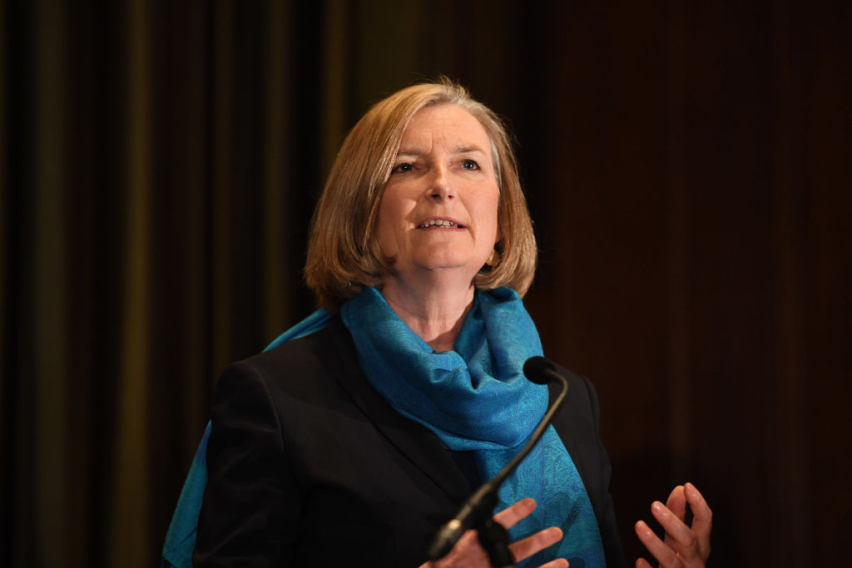
A new chair appointed to oversee the implementation of Jersey’s Assisted Dying Service previously argued that allowing doctors to prescribe medication with the intent of causing death would fundamentally change the relationship between doctors and their patients.
The Government of Jersey announced Sept. 3 that Dr. Sarah Wollaston, who spent 24 years working in hospital and primary care settings, had been appointed chair of the Assisted Dying Assurance and Delivery Committee. Wollaston is a former member of the UK Parliament and former chair of the Health and Care Select Committee in England and NHS Devon. She will lead the committee overseeing the implementation of Jersey’s Assisted Dying Service.
Assisted dying was approved by the States Assembly in February and received Royal Assent in July. The law requires the new service to be implemented and operated in accordance with the legislation and requires the committee to assure the Minister for Health and Social Services of the service’s quality and safety.
Wollaston said she was “honored” to have been appointed chair of the Assisted Dying Assurance and Delivery Committee.
“I want to make sure that this new service for the residents of Jersey is compassionate and lawful, with well-trained and supported staff, and that everyone involved keeps patients and their loved ones at the heart of everything we all do,” Wollaston said.
Wollaston previously wrote an opinion piece in The Guardian on Aug. 17, 2012, in which she expressed concerns about the implications of assisted dying for both doctors and patients.
“It isn't just the religious lobby that is opposed to a change in the law to allow assisted suicide,” Wollaston wrote.
“I have no faith banner to raise, and as a former doctor I know there are conditions for which I might at some point wish to end my life. Despite this, I don't believe I should have a right to make a doctor complicit in that decision.”
People with capacity should have a right to make decisions for themselves — “even if we don't agree with them, except where those decisions harm others,” Wollaston added.
“Assisted suicide does harm others: it harms the doctors who take on the responsibility for killing their patients,” Wollaston wrote.
“There is a vast difference between the moral responsibility in doctors withholding treatment that will end life and actively prescribing with the primary intent to ensure death. Failed attempts and the methods used may be distressing, but that does not justify the right to a clinically delivered death, which would fundamentally change the relationship between doctors and their patients and threaten to change the way society weighs the value of human life.”
The Assisted Dying Assurance and Delivery Committee is established in Jersey’s legislation. It will comprise between seven and 15 members, including a member from end-of-life or palliative care services and a representative of patients and/or relatives. Recruitment for the remaining committee members will begin in the coming months, following the appointment of the chair.
Senator Tom Binet, Jersey’s Minister for Health and Social Services, said Wollaston brings “extensive clinical experience, a strong understanding of health and care governance and a proven track record of public service.”
“Her role will be to provide independent assurance as the Committee oversees the implementation of the law approved by the Assembly,” Binet said.
“This appointment is about ensuring that, as we work towards the law coming into force, robust safeguards, effective governance and patient safety remain central. I look forward to working with Dr. Wollaston and the Committee as they undertake this important responsibility.”








