Cases of religious rights violations in Nicaragua in 2025 jumped to 309, up from 222 documented in the prior year, a new report by a Christian advocacy group shows.
The rights violations include arbitrarily detaining religious leaders, monitoring activities inside religious buildings, prohibiting public religious activities and canceling the legal status of hundreds of civil society organizations, including religious institutions, according to the report by U.K.-based Christian Solidarity Worldwide (CSW).
“While in some ways the regime has changed its strategies – releasing political prisoners into house arrest as opposed to forcing them into exile, for example – its primary goal remains the same: to control, coopt or eliminate anyone it deems a threat to its authority and survival,” CSW Director of Advocacy and Americas Team Leader Anna Lee Stangl said.
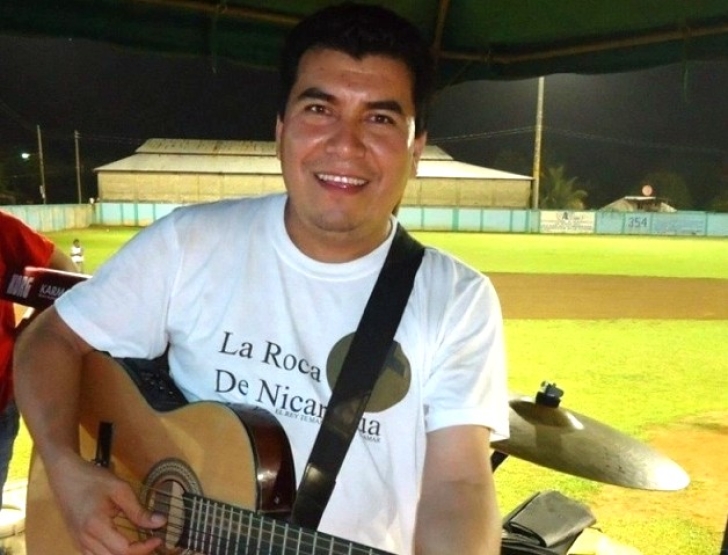
Violations included the arrest of Pastor Rudy Palacios Vargas, founder of La Roca de Nicaragua Church Association in Jinotepe, Carazo Department, whom the government has targeted since 2018 after he spoke out against violence by authorities against peaceful protesters and affirmed that he was praying for students involved in demonstrations. On July 17 he was arbitrarily detained along others, according to the report, entitled, “No Respite: Another Year of Increasing Repression in Nicaragua.”
Masked, armed police officers and “volunteer” officers forced their way into the homes of Pastor Vargas, his sister Jéssica Palacios Vargas and brothers-in-law Pedro José López and Armando José Bermúdez Mojica and arrested them without warrants. Also detained were Mauricio Alonso Petri, a political activist, friend of the pastor and church deacon, and his adult son Mauricio Alonso Estrada. Family friend Olga María Lara Rojas, a Christian but not a member of Pastor Vargas’ church, was also arrested at her home.
Officials showed no arrest warrants in all the detentions and confiscated mobile phones and other electronic devices, according to the report.
“No information as to their whereabouts was provided to the victims’ family members for all six months of their detention, in what amounted to enforced disappearance,” the report states.
Petri died in detention in August, and officials provided no explanation as to how he had died and prevented an autopsy.
In January, Pastor Palacios, Jéssica Palacios and Armando Bermúdez were released into house arrest.
“CSW sources report that they are under surveillance and their movements are restricted,” the report notes. “Olga Lara Rojas, Mauricio Alonso Estrada and Pedro José López were released under precautionary measures which require them to report to their local police stations to sign in on a regular basis.”
Climate of Fear
Of the 309 separate cases of violation of freedom of religion or belief last year, Protestant Christians were victims in 108 of them and Roman Catholics in 200. The remaining case involved a non-religious journalist targeted for covering religious issues.
The regime of President Daniel Ortega and his wife, Co-President Rosario Murillo, subjected activities inside religious buildings to overt and covert monitoring in 2025, with the report noting, “Religious leaders know not to speak or pray about specific topics.”
“Preaching about unity or justice or praying for imprisoned religious leaders or even the general situation in the country or internationally, for example, can be considered as criticism of the government and treated as a crime,” CSW stated. “Religious leaders who openly defend human rights, including Freedom of Religion or Belief, face the possibility of being arbitrarily detained in inhumane conditions and or forced into exile.”
Authorities increasingly imposed “precautionary measures” on religious leaders, forcing them to make weekly, in-person reports at police stations, share details of planned activities and obtain government authorization for permission to go outside their municipality. CSW documented 36 reports of officials subjecting people to precautionary measures, more than triple the number reported in 2024.
Many public religious activities, including traditional Roman Catholic processions and some associated with the Day of the Bible observed by both Roman Catholics and Protestants, remained prohibited, the report stated.
“Religious activities that previously took place outside in public spaces were confined to within the walls of the church building and often required prior authorization from the National Police (PN),” it stated.
Authorities exempted some religious groups aligned with and supportive of the government from prohibitions on public religious activities in public, granting permits for large-scale events.
“The government co-opted some religious festivals and traditions in an attempt to create an illusion of general respect for FoRB [Freedom of Religion or Belief],” the report stated.
Authorites continued to shut down independent civil society organizations (iCSOs), including religious institutions, arbitrarily stripping them of their legal status; the total number of iCSOs the government has made illegal now stands above 5,600, according to the report.
“In the current climate of fear, a significant percentage of violations goes unreported,” the report added.
In Jinotega Department, a lay leader was arrested at his home in May and taken to a municipal National Police station, where the chief informed him that he was detained based on reports from informants that he had prayed for “the freedom of Nicaragua.”
“The leader was stripped naked before he was taken to a cell where he was permitted only to wear underwear,” the report stated. “Over the night, he was removed from the cell three times for interrogation and was held until 1 p.m. the following day.”
Likewise, National Police stopped a Protestant pastoral couple travelling by car and told them of an order for their arrest based on an informant revealing they had mentioned the “situation in the country” at the previous Sunday’s worship service.
“They were finally released after eight hours in detention but warned: There are people in your church watching, and in a few days all the churches will be notified of new measures, and if you don’t follow instructions, your church will be expropriated,” the report stated.
Nicaragua ranked 32nd on Christian support organization Open Doors’ 2026 World Watch List of the countries where it is most difficult to be a Christian.