
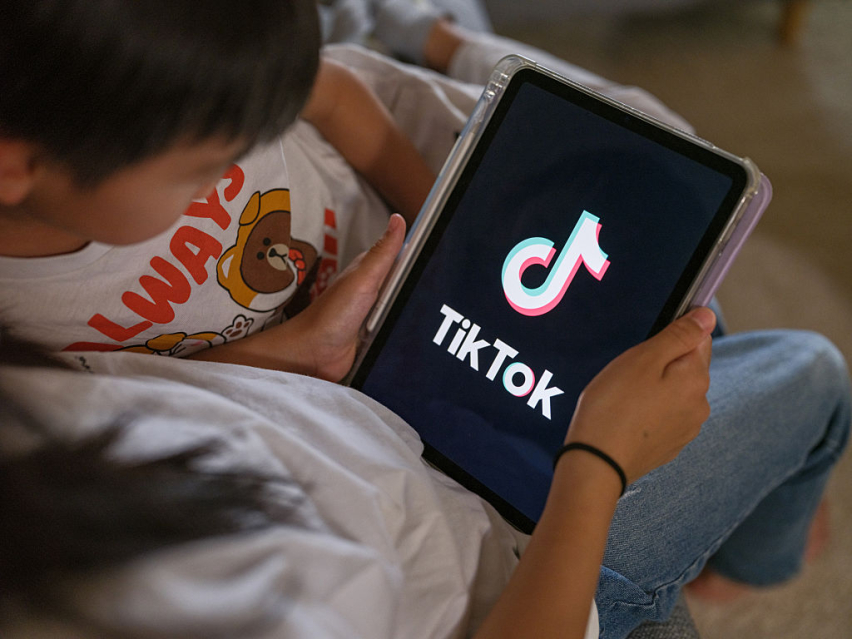
TikTok has agreed to pay $400 million to settle a federal lawsuit accusing the social media platform of systematically collecting personal data from children under the age of 13 without parental consent, the U.S. Justice Department announced Friday (Aug. 21). The settlement closes a case that exposed what prosecutors described as widespread, years-long failures in the company's handling of children's accounts.
The government filed the lawsuit in August 2024. Prosecutors said TikTok had gathered data from minors even within a product the company marketed as safe for children, and that the violations continued despite a prior legal agreement TikTok had reached with federal regulators in 2019, according to media reporting at the time.
Under the terms announced Friday, TikTok will pay $300 million. The Justice Department also asked the court to dissolve the 2019 consent agreement, after which TikTok would pay an additional $100 million. Stanley E. Woodward Jr., an associate U.S. attorney general, described the settlement as "a major victory for American children and parents."
Data gathered even in 'Kids Mode'
Among the most significant findings in the 2024 complaint were problems with TikTok's Kids Mode — a setting the company offered to users under 13 that it said would limit data collection and provide age-appropriate content.
Federal prosecutors said that even when children used that setting, TikTok continued collecting their email addresses and other personal information. The company also built profiles of young users based on their IP addresses and device identifiers. Some of that data was then shared with Facebook and a marketing firm, the government alleged — used, according to the complaint, to draw young users back to the platform after their activity had slowed.
Federal law restricts the collection of children's data to what is strictly necessary to operate an online service. Sharing it for marketing purposes, the Justice Department said, crossed that line.
Inadequate oversight of underage accounts
The 2024 complaint also revealed what prosecutors described as a serious underinvestment in child safety. Staff reviewing accounts to determine whether users were under 13 spent an average of only five to seven seconds assessing each profile, according to the filing.
At certain points, the entire team responsible for identifying and deleting underage accounts comprised fewer than 24 people. TikTok's own employees had raised internal concerns about the company's practices with underage accounts and the difficulty of removing them, the filing said.
The platform also frequently failed to honor parents' requests to delete their children's accounts — a requirement under federal law and, separately, under the 2019 agreement the company had reached with the Federal Trade Commission.
A repeated pattern of violations
The 2019 agreement had its origins in Musical.ly, a lip-syncing app that ByteDance acquired and merged with TikTok. The FTC had accused Musical.ly of collecting personal information from children without parental permission, resulting in a $5.7 million fine — a record at the time — and a commitment to new child protection measures that included notifying parents before collecting data and removing videos posted by children under 13.
When the FTC later investigated whether TikTok was honoring those commitments, it found evidence of continued violations and referred the matter to the Justice Department. The lawsuit accused TikTok of knowingly allowing children under 13 to create accounts and of violating the Children's Online Privacy Protection Act, a federal law restricting the online tracking of minors, The New York Times reported.
TikTok disputed the allegations at the time. "We disagree with these allegations, many of which relate to past events and practices that are factually inaccurate or have been addressed," company spokesman Alex Haurek said in a statement. "We are proud of our efforts to protect children."
Global regulatory scrutiny
The U.S. case was part of a broader pattern of regulatory action. In September 2023, the European Union fined TikTok 345 million euros for failing to protect the privacy of young users. Earlier that year, a British regulator fined the platform after finding that more than one million children under 13 had signed up for its service.
In the United States, lawmakers separately pursued broader child safety legislation. The Senate passed the Kids Online Safety Act in July 2024, which would require social media platforms to take additional steps to protect minors, though the bill's future in the House remained uncertain at that time.
Some governments have moved beyond fines and regulations to outright restrictions. Australia passed legislation banning children under the age of 16 from using social media platforms, among the strictest such laws in the world. Other countries have debated or adopted similar age-based restrictions, reflecting growing concern among lawmakers that voluntary safety measures by platforms have proven insufficient to protect young users.
TikTok has said it has committed billions of dollars and thousands of employees to making its platform safe. TikTok's U.S. operation did not immediately respond to a request for comment following Friday's settlement announcement, The New York Times reported.








