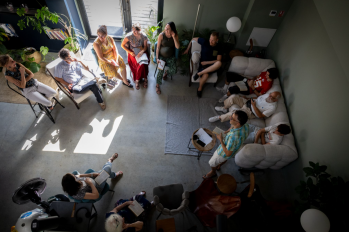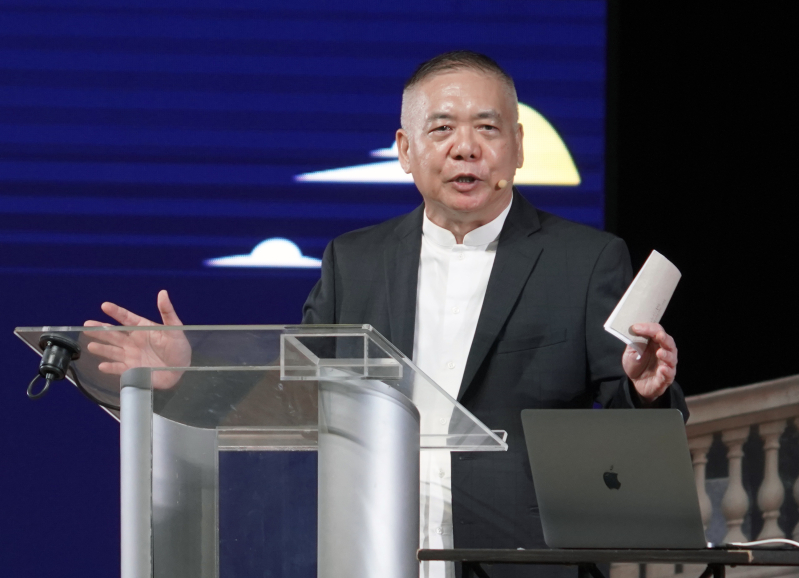
As the Asia Conference on Church & Mission (ACCM) 2026 concluded Thursday evening in Alabang, Metro Manila, Dr. Bambang Budijanto, General Secretary of the Asia Evangelical Alliance, described what he sees as a decisive turn in a movement that has been building across the region for two years — and laid out a concrete, time-bound plan to sustain it.
Speaking with Christian Daily International following the close of the gathering, Budijanto said this third iteration of the "Disciple or Die" gatherings had now achieved genuine, broad-based ownership from the national alliances across Asia.
"I think we have gained some significant traction," he said, "with a lot of energy, buying in from national alliances. It takes two years to be on the same page with the same understanding, with the same passion for discipleship."
The ACCM follows two earlier gatherings organized by the Asia Evangelical Alliance: the AEA's 11th General Assembly in Ulaanbaatar, Mongolia in August 2024, held under the banner "Disciple or Die," and the Asian Evangelical Leadership Forum near Seoul, South Korea in June 2025, convened as "Disciple or Die 2.0." Manila's conference was styled as "Disciple or Die 3.0," carrying 210 delegates from 25 nations, and was framed explicitly as a transition from conversation to action.
Moving from concepts to implementation
Budijanto drew a clear distinction between what this gathering represented and what the earlier ones had accomplished. The first two conferences, he suggested, were necessary for building shared understanding and a common vocabulary around discipleship. By the time delegates gathered in Manila, the groundwork had been laid for something more operational.
"The 3.0 now is more toward action," he said. "We no longer just discuss concepts or definitions."
As evidence of the shift, he pointed to a leadership meeting held the day before the conference closed, in which all the national alliance leaders present discussed a coordinated package of next steps. "Almost every National Alliance raised their hand — we want it," he said of the proposed action framework.
Seven interventions
Budijanto outlined seven categories of follow-through that emerged from that leadership session, describing them as the structural spine of the movement going forward.
The first is momentum — keeping energy alive between annual gatherings rather than allowing it to dissipate. He said the approach will be to accumulate momentum through a regional conference held every year, with the next gathering already being referred to as "Disciple or Die 4.0." "Every year we'll hopefully have accumulated energy toward a greater movement," he said.
The second is what he called "vision casting" — disseminating the core message broadly at the national level. This means each national alliance taking ownership of organizing large-scale inspiration events within their own countries rather than waiting for a regional gathering to do it for them.
Third is equipping. Budijanto described a workshop and training program being developed to run at the national level and then cascade further to local churches. It would be structured as a three-and-a-half-day event template that combines a full first day of inspirational vision casting with two days of hands-on training divided into three groups — 40 participants being trained as youth mentors, 40 as family discipleship champions, and 120 as pastors equipped to lead their congregations into disciple-making. A half-day session at the end trains trainers, so the capacity multiplies outward. He said nearly every national alliance present expressed a desire to host one of these events, and the plan is to run them across 12 to 15 countries between now and the end of 2028.
Fourth is resourcing — providing tools and materials to accelerate the work of those already engaged.
Fifth is measurement. "Without measurement, we won't be able to see progress," Budijanto said, describing plans to build monitoring processes that allow the movement to track which churches are genuinely moving along a discipleship pathway rather than simply attending events.
Sixth is encouragement — specifically for churches and leaders who are partway along the journey and not yet at the targets being set. Budijanto said the movement uses a "playbook" to define progress and wants to recognize and support those working through it, even if they have not yet reached the 20 percent threshold used to mark a congregation as a genuine disciple-making church.
The seventh is collaboration — what he described as churches and alliances agreeing not to work in isolation. He said a digital platform called "DCAR" (Disciple-making Church Advancement Record) is being used to facilitate coordination, and he sees the annual conference cycle as another mechanism for keeping national alliances working together.
The unique role of national alliances
Budijanto's emphasized that the national alliances — the organizational middle layer between the Asia Evangelical Alliance and local congregations — must themselves undergo a transformation, not simply relay information downward.
"The conference challenges the National Alliance to rethink their role, not as a coordinator, but as a disciple maker," he said. "It cannot just pass on the idea to the local church. You have to start from yourself, including the National Alliance leadership."
He argued that simply transmitting information about discipleship without embodying it will produce no lasting results. "You cannot just pass on information. It will not go anywhere." Instead, he said, national alliance leaders must begin discipling within their own inner circles, allowing the transformation to become visible before they ask churches to follow.
Budijanto connected this to a broader argument about spiritual vitality. When national alliances function mainly as coordinators and event managers, he suggested, they tend toward institutional thinking. Reorienting them around disciple-making, he said, "will help the national alliances becoming more spiritual rather than just management."
He also acknowledged that the scale of the plan creates real capacity challenges. "Yesterday almost every national alliance raised their hand — we want it," he said of the event template. "But of course, the capacity to do that — like 12 countries or 15 countries in two years — is not easy."
He said organizations including the Philippines Council of Evangelical Churches have committed to help facilitate trainers, but that the emphasis from the Manila gathering was on placing ownership firmly at the national level rather than at the regional or global level. "If the National Alliance owns this, it's much easier because we don't have to put things too much on the center."
Five thousand churches by next year
On numbers, Budijanto said he hopes to be able to formally acknowledge 5,000 churches across Asia that are on the journey toward becoming genuine disciple-making churches by the time of next year's annual gathering. In the longer run, he described a vision of 100,000 churches continent-wide engaged through the movement's platform and resourcing.
"It's not just about numbers," he said. "I believe if the church is healthy, then the impact on the nation is deeper."
Budijanto believes church health, family health and national alliance health are not separate domains. "The health of the family has a direct correlation with the health of the church," he said, "and the health of the church has a direct correlation with the health of the National Alliance. So that's the thing we need to keep, to see everything on that line."
Returning the church to its original design
In closing, Budijanto's expressed that his hope is that the Asia Evangelical Alliance and the national alliances it brings together would become instruments for restoring local congregations to what he described as their original purpose.
"My hope is that somehow God will use the National Alliances and Regional Alliance to not only focus on the church, but adding value to the journey of church going back to its original design as a disciple-making source," he said.
He described the ACCM as a significant acceleration in that direction — more than the two previous gatherings had achieved — while acknowledging the distance still to be covered. The shift from concept to commitment, he suggested, was real. Whether it produces lasting movement across the continent's thousands of evangelical churches will depend, in his view, on whether the leaders who left Manila were changed not just in their programs but in how they live.
"Start from within," he told delegates during the closing commissioning. "It all starts with us."
The ACCM 2026 was organized by the Asia Evangelical Alliance in collaboration with the Philippine Council of Evangelical Churches, and was hosted by Greenhills Christian Fellowship South Metro in Alabang, Metro Manila. On June 12, the conference was followed by an International Disciple Making Conference, where ACCM participants were joined by approximately 800 Filipino pastors and church leaders for an additional day focused on disciple-making at the local church level.