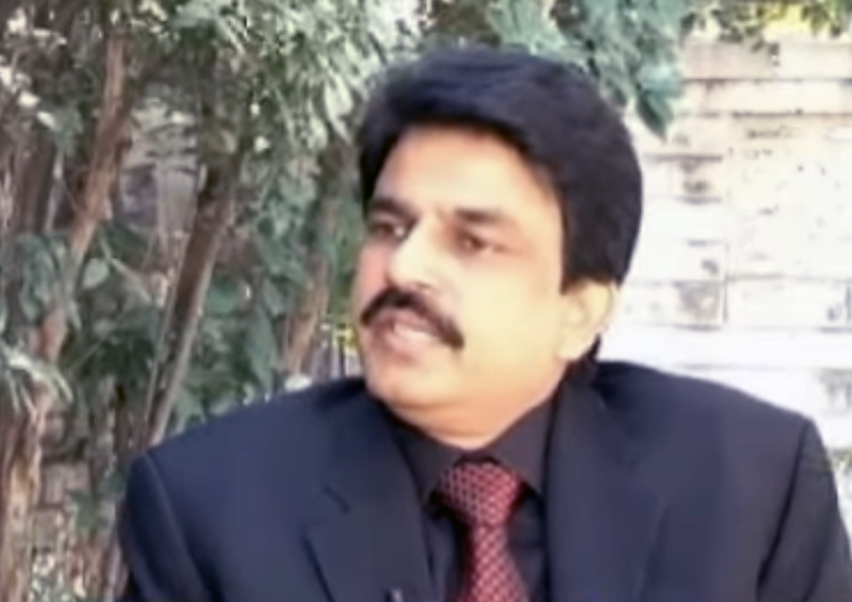
As Pakistan observes National Minorities Day on Aug. 11, the legacy of slain Christian federal minister Shahbaz Bhatti continues to shape the country’s minority rights landscape through reforms that remain among the most significant protections secured for religious minorities since the Muslim-majority nation’s creation almost eighty years ago.
Remembered internationally for his outspoken opposition to the misuse of Pakistan’s blasphemy laws, Bhatti also spearheaded a series of institutional reforms that continue to benefit Christians, Hindus, Sikhs and other minority communities. Among his most enduring achievements as a parliamentarian were securing official recognition of Aug. 11 as National Minorities Day, introducing a 5 percent employment quota for religious minorities in federal government jobs, and helping secure four reserved seats for non-Muslims in Pakistan’s Senate.
Bhatti, a Roman Catholic and Pakistan’s first federal minister for minorities affairs, was assassinated in Islamabad on March 2, 2011, after repeatedly calling for reforms to curb abuse of the country’s blasphemy laws and advocating equal rights for religious minorities. Militants linked to the Pakistani Taliban claimed responsibility for his killing.
While his assassination drew worldwide condemnation and established him as a global symbol of religious freedom, those who worked alongside him say his broader political achievements deserve equal recognition.
“Many people remember Shahbaz Bhatti for his courageous stand against the misuse of the blasphemy laws,” Advocate Akmal Bhatti, a close associate of the late minister and chairman of Minorities Alliance Pakistan (MAP), told Christian Daily International. “But he also worked tirelessly to secure constitutional and legal protections that continue to benefit minority communities today.”
According to Akmal Bhatti, Shahbaz Bhatti was the first Christian political leader to actively promote unity across denominational lines, believing that Christians could advocate more effectively by speaking with one voice. He also forged an alliance with the Pakistan People’s Party (PPP), a move that helped increase Christian representation in both the National Assembly and provincial legislatures.
“The Christian representatives of that time were more effective than today’s lawmakers, who are handpicked by political parties and often compelled to toe the party line on key issues,” he said.
One of Bhatti’s earliest accomplishments was persuading the Pakistan People’s Party-led federal government in 2009 to officially designate Aug. 11 as National Minorities Day. The date commemorates Muhammad Ali Jinnah’s historic address to Pakistan’s Constituent Assembly on Aug. 11, 1947, in which the country’s founder declared that citizens were free to practice their religion and that faith should have no bearing on equal citizenship.
Since then, successive governments have observed National Minorities Day annually, issuing messages reaffirming Pakistan’s constitutional commitment to religious freedom and equal citizenship.
Akmal Bhatti said the late minister also institutionalized official recognition of major religious festivals celebrated by minority communities.
“It is because of his efforts that Christmas cake-cutting ceremonies are held at the President’s House, the Prime Minister's House and other federal and provincial government institutions,” he said.
Shahbaz Bhatti also played a pivotal role in introducing a 5 percent quota for religious minorities in federal government employment, arguing that greater representation in public institutions was essential to addressing decades of exclusion. The policy remains one of Pakistan’s most significant affirmative-action measures for religious minorities.
Another milestone was the allocation of four reserved seats for non-Muslims in the Senate, ensuring permanent minority representation in Pakistan’s upper house of Parliament.
Tahir Naveed Chaudhry, a former member of the Punjab Assembly elected on the ticket of Bhatti’s All Pakistan Minorities Alliance (APMA), described Senate representation as one of the late minister’s key achievements.
“Shahbaz Bhatti believed minorities should not merely be protected but should actively participate in shaping national policy,” Chaudhry told Christian Daily International. “His vision was to strengthen Pakistan by ensuring that every citizen had a voice regardless of religious identity.”
Bhatti’s advocacy extended well beyond political representation. He consistently pressed for stronger legal protections against religious discrimination, promoted interfaith dialogue, encouraged reforms to remove intolerant material from school curricula, and sought greater social and political inclusion of minority communities.
Internationally, however, he became best known for defending Christians and other religious minorities accused under Pakistan’s blasphemy laws. He publicly supported Asia Bibi, the Christian farm worker sentenced to death on blasphemy charges in 2010 and later acquitted by Pakistan’s Supreme Court after spending nearly nine years on death row. Bhatti repeatedly called for procedural safeguards against false accusations, arguing that the laws were frequently exploited to settle personal disputes and target vulnerable communities.
His outspoken stance drew fierce opposition from Islamist extremists, who branded him a blasphemer and repeatedly threatened to kill him. Despite opportunities to leave Pakistan, Bhatti refused, saying he was prepared to sacrifice his life for the rights of marginalized communities.
More than 15 years after his assassination, the reforms Shahbaz Bhatti championed remain central to Pakistan’s minority rights framework. Yet his former colleagues say many of the challenges he sought to address persist.
Christians, Hindus, Ahmadis and other minority communities continue to report discrimination, attacks on places of worship, forced conversions and marriages of underage girls, and misuse of the country's blasphemy laws despite constitutional guarantees of equal citizenship.
Both Akmal Bhatti and Tahir Chaudhry said Bhatti’s vision remains unfinished, arguing that the reforms he secured can achieve their full promise only through consistent implementation and sustained political commitment.
Akmal Bhatti said weak enforcement of the 5 percent job quota has allowed many government departments to avoid transparently advertising positions reserved for minorities or to leave them vacant. “Even when recruited, non-Muslims are often disproportionately appointed to lower-grade sanitation jobs rather than professional or administrative positions.”
He noted, however, that sustained advocacy by minority rights groups prompted the federal government to hold a special civil service examination in 2023 to fill positions reserved for minorities.
“Although very few Christian candidates passed the written examination, we remain hopeful that the number will increase in the coming years,” he said.
Chaudhry said the continued misuse of Pakistan’s blasphemy laws remains one of the country’s gravest human rights concerns.
“Shahbaz Bhatti sacrificed his life for speaking out against the abuse of the blasphemy laws,” he said. "It is tragic that even today hundreds of people remain in prison or have lost their lives because of fabricated blasphemy allegations.” He urged the government to introduce legislation criminalizing false accusations of blasphemy.
As Pakistan marks another National Minorities Day, Shahbaz Bhatti's life stands as both a reminder of the personal cost of defending religious freedom and a testament to the lasting impact of principled public service.
His campaign against the misuse of the blasphemy laws made him an internationally recognized symbol of courage. Yet his success in embedding lasting protections for Pakistan's religious minorities into the country's political and legal framework may ultimately prove to be his greatest legacy.